Newsletter Subscribe
Enter your email address below and subscribe to our newsletter

All voices matter
Wood is one of the most important materials in a traditional sauna.
It determines much of the sauna’s appearance and contributes to the overall atmosphere of the room. Wood is used for walls, ceilings, benches, backrests, doors, and other interior components.
However, not every type of wood is equally suitable for every sauna application.
Different species have different characteristics, appearances, textures, and price points. The best choice depends on where the wood will be used and what type of sauna you are planning.
In this guide, we look at some of the most common sauna woods and the factors you should consider before choosing one.
A sauna is a unique environment.
The interior can experience elevated temperatures and changing humidity, so the materials need to be selected carefully.
Good sauna wood should be appropriate for the intended temperature and humidity conditions and should work well for the specific part of the sauna where it will be installed.
Wood also contributes to:
The right wood can make a sauna feel warm, natural, and comfortable.
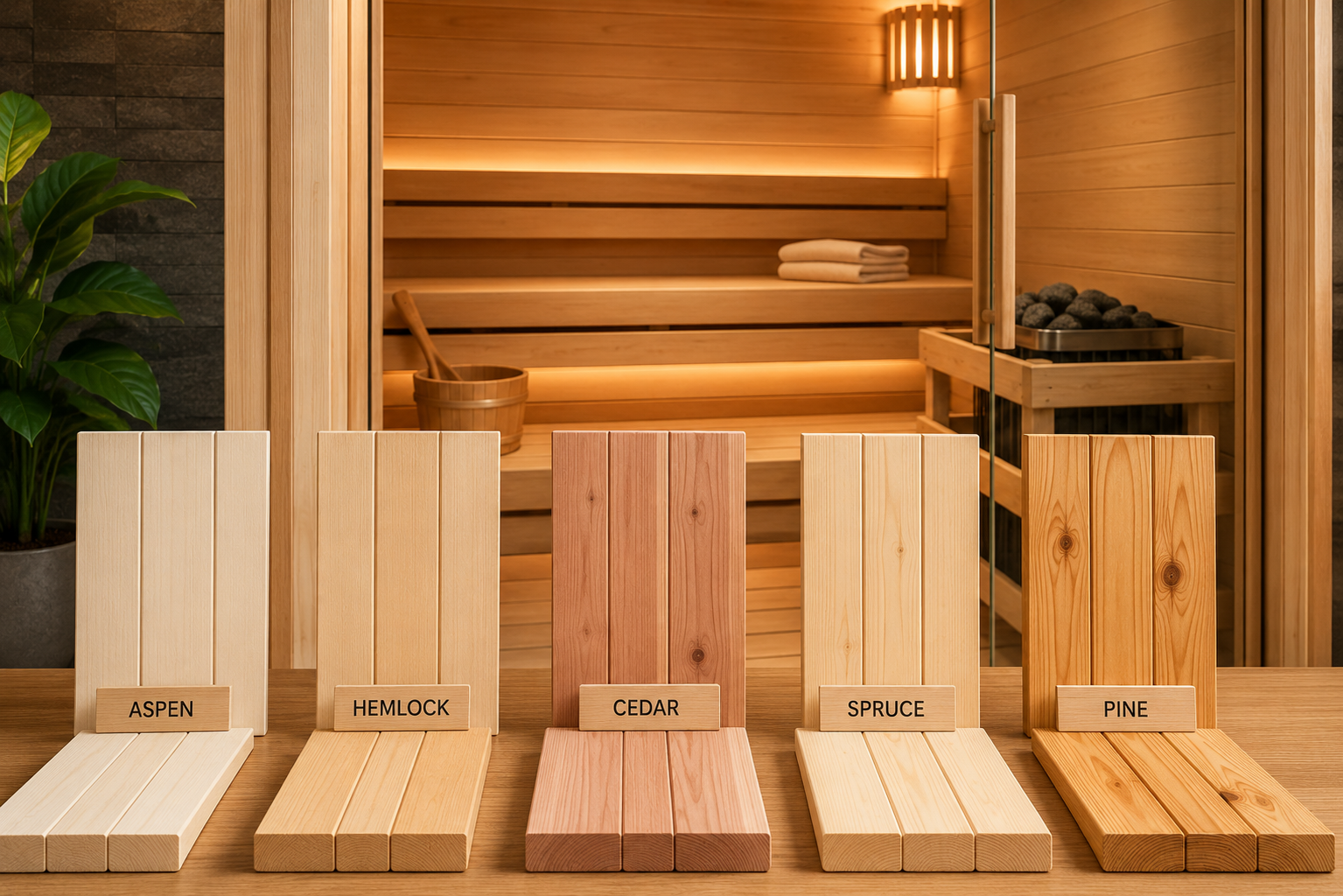
Several wood species are commonly associated with sauna construction.
Popular options include:
Each has different characteristics.
There is no single wood species that is automatically the best for every sauna.
Cedar is one of the best-known choices for sauna interiors.
It is often selected for its distinctive appearance and natural aroma.
Cedar can create a warm and traditional atmosphere while offering an attractive grain pattern.
Potential advantages include:
However, cedar can be more expensive than some other wood options.
The specific grade and type of cedar can also affect the price and appearance.
Hemlock is another popular option for sauna interiors.
It generally has a relatively clean and understated appearance.
Its lighter color can work well with modern sauna designs.
Hemlock may be suitable for homeowners who prefer:
As with any sauna wood, the exact product should be selected according to the manufacturer’s intended application.
Aspen is often associated with light-colored sauna interiors.
It has a relatively smooth appearance and can create a bright, clean atmosphere.
Aspen is also commonly considered for sauna benches and interior surfaces.
Its neutral appearance makes it easy to combine with different lighting styles and sauna accessories.
Spruce is another common wood used in sauna construction.
It can provide a traditional Nordic-style appearance with visible grain and a light color.
Spruce may be attractive for homeowners who want a natural wood interior without choosing a darker wood species.
Different grades can produce noticeably different appearances.
Pine is widely available and can be a more budget-friendly option.
It has a recognizable grain pattern and can create a warm traditional appearance.
However, not every pine product is appropriate for every sauna application.
When choosing pine for a sauna, make sure the product is specifically intended for the location and conditions where it will be installed.
Bench wood deserves special attention.
You regularly come into contact with sauna benches, so surface temperature, smoothness, and comfort matter.
Common choices for benches include:
The ideal material depends on the sauna design and manufacturer’s recommendations.
For benches, look for wood that is smooth, comfortable, and appropriate for the temperatures expected in the sauna.
Wall materials can provide more flexibility than bench materials.
Popular choices include:
The choice is largely based on appearance, budget, availability, and suitability for sauna conditions.
You can also combine different woods.
For example, lighter wall panels can be paired with a contrasting bench material to create a more distinctive interior.
Wood color can significantly change the appearance of a sauna.
Light-colored woods can make a small sauna feel brighter and more spacious.
They work particularly well with:
Darker wood can create a more traditional and dramatic atmosphere.
It can work well with:
The choice is primarily aesthetic as long as the selected material is appropriate for sauna use.
The grain pattern also affects the final appearance.
Some homeowners prefer a clean and subtle grain, while others want the natural patterns of the wood to be more visible.
When purchasing wood panels, look at samples if possible.
The same species can look quite different depending on grade, cut, finish, and lighting.
This depends on where the wood is being used and the product manufacturer’s recommendations.
Some sauna interiors are intentionally left unfinished.
Other components may require an appropriate sauna-specific treatment.
Do not use an ordinary household paint, stain, or coating without confirming that it is suitable for sauna temperatures and the intended application.
When in doubt, follow the wood manufacturer’s care instructions.
Traditional saunas can experience changes in humidity, particularly when water is added to sauna stones in systems designed for that purpose.
The wood should therefore be allowed to dry properly between uses.
Good sauna practices include:
The construction and ventilation system also play an important role in managing the sauna environment.
Sauna wood should be cleaned gently.
Avoid soaking the wood unnecessarily.
For routine cleaning:
Benches may require more frequent cleaning because they have direct contact with users.
Yes, combining different woods can create an attractive interior.
For example:
Light walls + darker benches
can create a simple visual contrast.
Another approach is:
Natural wood walls + darker backrest
for a more contemporary appearance.
When combining materials, make sure every product is appropriate for its intended location.
The interior wood selection can be similar, but outdoor sauna construction has additional requirements.
An outdoor sauna has an exterior exposed to:
Exterior cladding therefore needs to be selected specifically for outdoor conditions.
Do not confuse exterior weather-resistant wood with wood intended for the hot interior of a sauna.
These are separate material considerations.
The price of sauna wood depends on:
Premium wood species and higher grades generally cost more.
If you have a limited budget, you do not necessarily need to choose the most expensive wood.
Instead, prioritize the areas that users see and touch most frequently.
| Feature | Cedar | Hemlock | Aspen |
|---|---|---|---|
| Appearance | Warm, distinctive | Light, clean | Light, smooth |
| Aroma | Noticeable | Subtle | Mild |
| Style | Traditional | Modern | Minimalist |
| Bench use | Possible | Possible | Popular option |
| Price | Often higher | Mid-range | Varies |
| Maintenance | Depends on finish | Generally simple | Generally simple |
These are general characteristics. Actual performance depends on the specific wood product and sauna construction.
If budget is an important factor, start with the areas that matter most.
For example, you might choose a more affordable wood for the walls while using a comfortable, high-quality material for the benches.
You can also reduce costs by:
The goal is to balance appearance, comfort, suitability, and cost.
A beautiful wood species is not necessarily appropriate for every sauna application.
Different parts of the sauna have different requirements.
Bench material, wall material, and exterior cladding do not necessarily need to be identical.
The same species can have different grades and appearances.
Ordinary household coatings may not be appropriate for sauna temperatures.
All wood interiors benefit from proper cleaning and drying.
Always verify that the product is designed for the intended sauna application.
Before purchasing, ask:
There is no universal best choice. Cedar, hemlock, aspen, spruce, and other suitable woods can all be used depending on the application, design, budget, and manufacturer’s specifications.
Cedar is a popular sauna wood because of its appearance and distinctive aroma. It can be used for many sauna interior applications when properly selected.
Aspen, abachi, cedar, and other suitable low-resin woods are commonly considered for sauna benches. The material should be smooth and appropriate for the expected temperatures.
Some pine products can be suitable for sauna construction, but the specific product and application should be checked carefully before installation.
Only use a finish specifically recommended for the intended sauna application. Ordinary stains and paints may not be suitable for high-temperature environments.
Yes. Regular cleaning, proper ventilation, and allowing the sauna to dry can help maintain the interior wood over time.
Choosing the right wood is an important part of creating a comfortable and attractive sauna.
Cedar, hemlock, aspen, spruce, and pine each offer different appearances and characteristics.
Instead of looking for one universally “best” wood, consider where the material will be used, how the sauna will be operated, your preferred interior style, and your budget.
Pay particular attention to bench materials because they come into direct contact with users.
For the walls and ceiling, choose a wood that complements the overall design while being appropriate for sauna conditions.
With the right material selection and regular care, a well-designed wood interior can remain attractive and comfortable for many years.