Newsletter Subscribe
Enter your email address below and subscribe to our newsletter

All voices matter
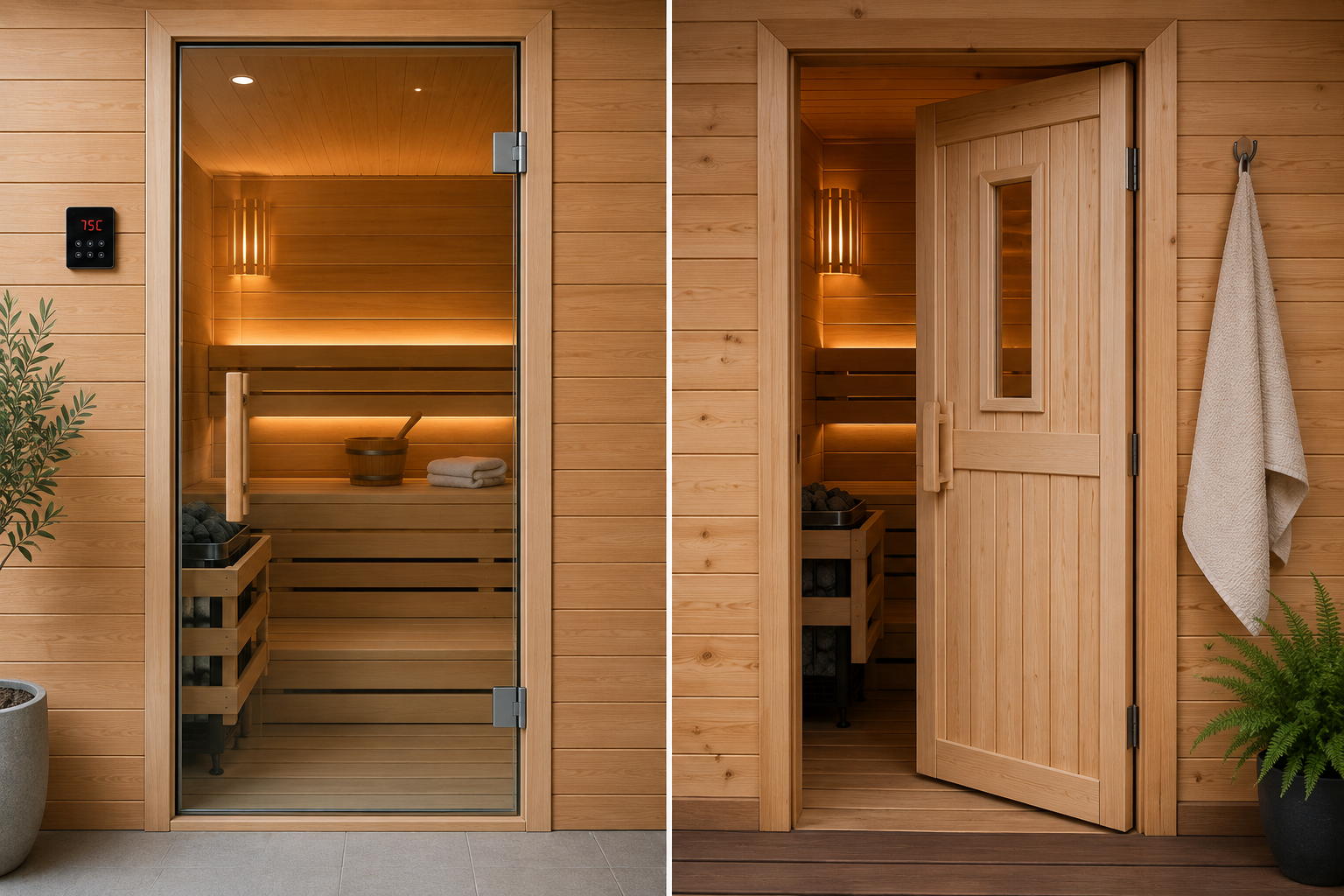
A sauna door may seem like a small part of the overall design, but it can have a noticeable impact on the appearance, usability, and layout of a sauna.
When choosing a sauna door, homeowners often focus on appearance first. Glass doors are popular for modern sauna designs, while solid wood doors are often associated with a more traditional look.
However, there are several other factors to consider, including door size, glass type, frame material, hardware, ventilation, privacy, and the available space around the entrance.
This guide explains the main things to consider when choosing a door for a home sauna.
The sauna door is more than simply an entrance.
It can affect:
Because the door is used every time you enter and leave the sauna, convenience should be considered alongside appearance.
Glass doors are widely used in modern sauna designs.
A glass door can make a small sauna feel more open and visually connected to the surrounding room.
It can also allow light to pass through the entrance instead of creating a completely enclosed appearance.
Common advantages include:
However, glass doors can require more cleaning because fingerprints and water marks may be visible.
A solid or partially wooden door can provide a more traditional appearance.
Wood works naturally with sauna walls, benches, and ceilings, creating a consistent interior style.
Wooden doors can be particularly suitable for homeowners who want:
The specific wood and construction should be appropriate for sauna conditions.
There is no single best option for every sauna.
| Feature | Glass Door | Wood Door |
|---|---|---|
| Appearance | Modern | Traditional |
| Visibility | High | Low |
| Natural Light | More | Less |
| Privacy | Lower | Higher |
| Cleaning | More visible marks | Depends on finish |
| Visual Space | Makes room feel more open | Creates a more enclosed feel |
Your choice should depend on the style of the sauna and how the space will be used.
If you choose a glass sauna door, the glass should be specifically appropriate for the intended sauna environment.
Tempered safety glass is commonly used for sauna doors because of its safety characteristics.
The exact glass specification should follow the door manufacturer’s recommendations.
Do not replace a sauna door with ordinary household glass simply because the dimensions appear to match.
Clear glass provides maximum visibility and allows more light into the sauna.
Tinted glass creates a darker appearance and can provide additional visual privacy.
The choice depends mainly on the interior design and the level of privacy you prefer.
For a small modern sauna, clear glass can help the room appear larger.
For a more private installation, tinted or partially obscured glass may be more suitable.
Door dimensions depend on the sauna design, wall construction, available space, and local requirements.
There is no single door size that is suitable for every sauna.
Before purchasing a door, measure:
Always compare your measurements with the manufacturer’s specifications.
The direction in which a sauna door opens is an important design consideration.
The door should not interfere with:
The available space around the entrance should therefore be considered before installation.
Follow the door manufacturer’s installation instructions and applicable local requirements.
Door handles should be comfortable and appropriate for the sauna environment.
Wooden handles are popular because they fit naturally with sauna interiors and generally provide a comfortable surface to hold.
The hardware should be selected specifically for the intended temperature and humidity conditions.
Avoid using hardware simply because it looks attractive if it is not suitable for the sauna environment.
A sauna door may use seals around the frame to improve the fit.
The seal should be compatible with the door and operating conditions.
A good fit can help minimize unnecessary air leakage while still allowing the sauna to function according to its intended ventilation design.
Do not modify or completely seal the door if doing so conflicts with the sauna’s ventilation requirements.
The insulation requirements depend on the door design.
A solid sauna door can incorporate insulating materials within its construction.
Glass doors generally use a different construction approach.
When comparing doors, look at the complete door assembly rather than considering insulation as a single feature.
A framed glass door can provide a more traditional and substantial appearance.
The frame can also visually connect the door with the surrounding woodwork.
Frameless designs create a minimalist appearance.
They can make the entrance look cleaner and more contemporary.
However, the hinges, handle, seals, and mounting system still need to be suitable for the door’s weight and sauna environment.
Privacy is an important consideration if the sauna is located in a shared bathroom, bedroom, or living area.
If privacy is important, consider:
A completely transparent door may not be ideal for every household.
The door is also part of the overall sauna airflow design.
The ventilation system should be planned together with the heater, intake, exhaust, and door.
Do not assume that changing the door will have no effect on airflow.
If you are replacing an existing sauna door, check whether the new installation changes the ventilation arrangement.
A small sauna requires careful planning.
A large door can take up valuable wall space and may interfere with benches or equipment.
Glass can be useful visually because it makes the space feel more open.
Before choosing the door, draw the entrance area and mark the opening direction.
This simple step can prevent problems during installation.
Outdoor sauna cabins may require additional consideration.
The door needs to work with:
An outdoor sauna door should be specifically suitable for the installation rather than simply using an interior sauna door.
A beautiful door still needs to be suitable for a hot and humid environment.
Always check whether the door can open without hitting benches or other objects.
The finished door dimensions and the required wall opening are not always identical.
Use glass and hardware specifically designed for the intended application.
Do not modify the door or surrounding structure in a way that interferes with the intended ventilation system.
Handles, hinges, seals, and other components need to be appropriate for their location.
Before purchasing, consider these questions:
Answering these questions can make the buying process much easier.
Yes. Glass doors are popular in modern sauna designs because they provide visibility and can make the space feel more open. The glass must be suitable for the sauna environment.
Neither is universally better. Wooden doors offer more privacy and a traditional appearance, while glass doors provide a modern look and greater visibility.
The correct configuration depends on the specific sauna design, available space, door system, and applicable safety requirements. Follow the manufacturer’s installation instructions and local requirements.
It is not recommended to assume that a standard interior glass door is suitable. Sauna doors need components appropriate for the heat and humidity of the environment.
Measure the required rough opening, wall thickness, available clearance, and door area. Then compare the measurements with the manufacturer’s installation specifications before ordering.
Choosing the right sauna door involves more than selecting a style.
Glass and wood doors can both work well, but the best choice depends on privacy, room size, appearance, maintenance, ventilation, and installation requirements.
For a modern home sauna, a glass door can create an open and spacious appearance. For a more traditional design, a wooden door can provide a warmer and more private atmosphere.
Before purchasing, carefully check the dimensions, opening direction, glass specification, hardware, seals, and installation requirements.
A well-chosen sauna door can complement the rest of the room while making the sauna easier and more comfortable to use.