Newsletter Subscribe
Enter your email address below and subscribe to our newsletter

All voices matter
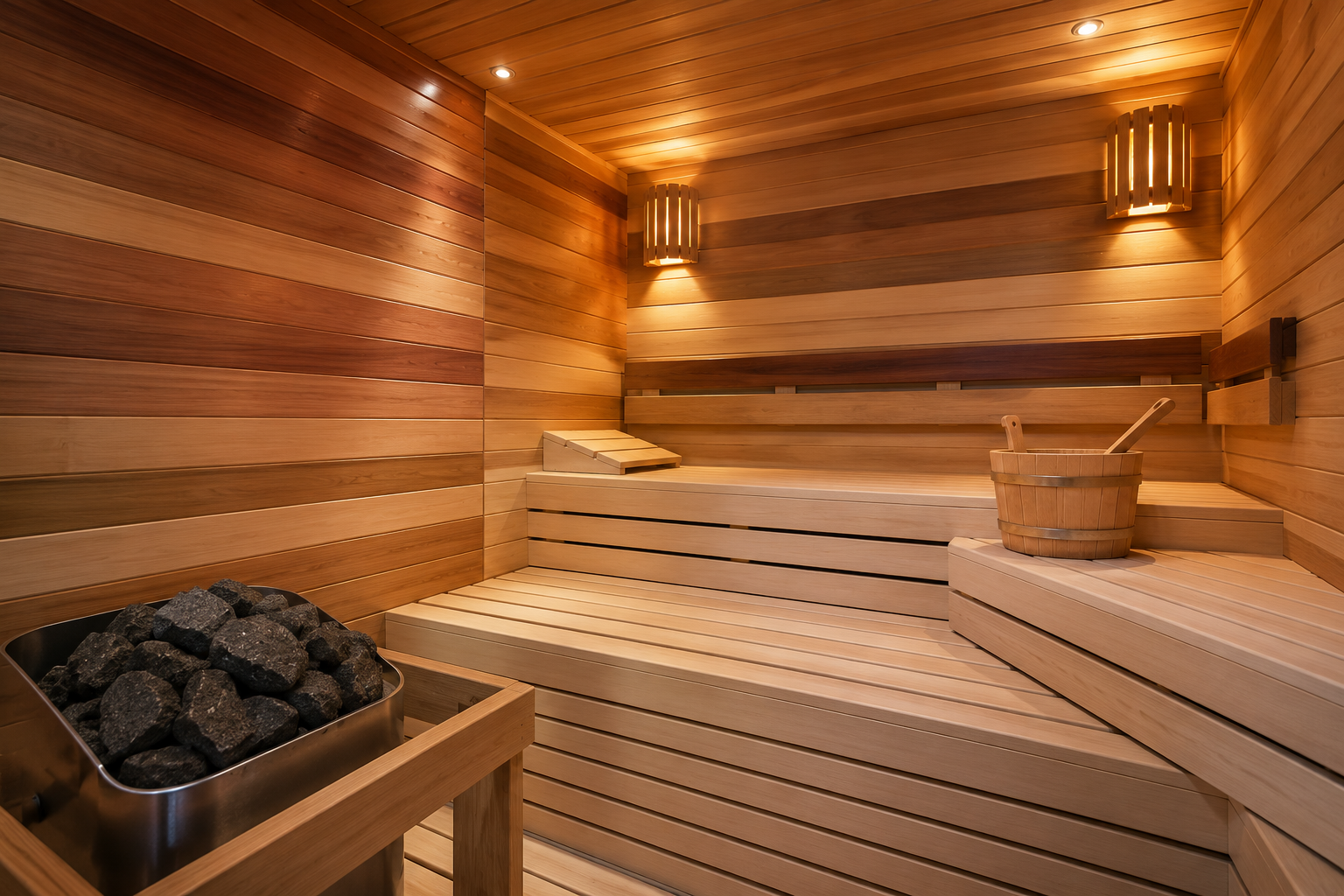
When designing a home sauna, the benches are just as important as the heater, wood panels, and lighting. A well-designed sauna bench provides comfortable seating, makes efficient use of available space, and contributes to the overall appearance of the room.
The right sauna bench design depends on several factors, including the size of the sauna, the number of people who will use it, the type of wood, and the arrangement of the seating levels.
Some homeowners prefer a simple single-level bench, while others choose a multi-level layout that provides more seating options and makes better use of vertical space.
In this guide, we will explore common sauna bench designs, compare popular materials, and explain how to plan a practical and comfortable seating area for your home sauna.
Sauna benches are more than places to sit. Their height, depth, arrangement, and construction influence how comfortable and functional the sauna feels.
A thoughtful bench design can help:
Because sauna temperatures vary at different heights, bench placement also affects the temperature users experience. The ideal arrangement depends on the sauna’s ceiling height, heater, ventilation, and intended use.
There are several popular seating layouts for residential saunas. Each offers different advantages depending on the room dimensions and the number of users.
A single-level bench provides a simple seating arrangement, usually along one wall.
This design works well in compact saunas where floor space is limited or where users prefer straightforward access without climbing between levels.
Advantages include a clean appearance, a relatively simple structure, and easier access for cleaning.
However, a single-level layout offers fewer seating options at different heights. It may not be the best solution for a larger sauna intended to accommodate several people simultaneously.
Two-level benches are a common choice for traditional home saunas.
The upper bench provides a higher seating position, while the lower bench can serve as additional seating or a step, depending on the design.
This arrangement makes use of vertical space and allows users to choose between different seating heights.
The dimensions and spacing should be planned carefully so that users can sit comfortably and move between levels safely.
An L-shaped bench follows two adjoining walls, creating seating around a corner.
This arrangement can be useful when a sauna needs to accommodate multiple users without placing all the seating along a single wall.
L-shaped benches can also create a more social layout, allowing people to sit facing different directions.
Before choosing this design, make sure the corner does not become difficult to access and that the bench arrangement does not interfere with the heater or door.
A U-shaped layout places seating along three sides of the sauna.
It can work well in larger custom sauna rooms where group seating is a priority.
However, this layout requires sufficient floor space and careful planning around the entrance, heater, and walking area. In a small sauna, U-shaped benches may make the room feel crowded.
The following table compares common layouts to help you identify which may suit your sauna.
| Bench Design | Main Advantage | Space Requirement | Suitable Application |
|---|---|---|---|
| Single-level | Simple and accessible | Low to moderate | Compact home sauna |
| Two-level | Offers different seating heights | Moderate | Traditional residential sauna |
| L-shaped | Uses a corner for additional seating | Moderate to high | Medium-sized sauna |
| U-shaped | Provides seating on three sides | High | Large custom sauna |
| Removable lower bench | Offers flexible space and easier cleaning | Depends on main layout | Flexible home sauna design |
The best arrangement is the one that fits the actual room dimensions while leaving enough space for safe movement and proper heater clearances.
Bench material is an important consideration because users sit directly on the wood, often with a large portion of their skin in contact with it.
Sauna bench wood should be suitable for high temperatures and repeated exposure to changing humidity. It should also have a comfortable surface and be easy to maintain.
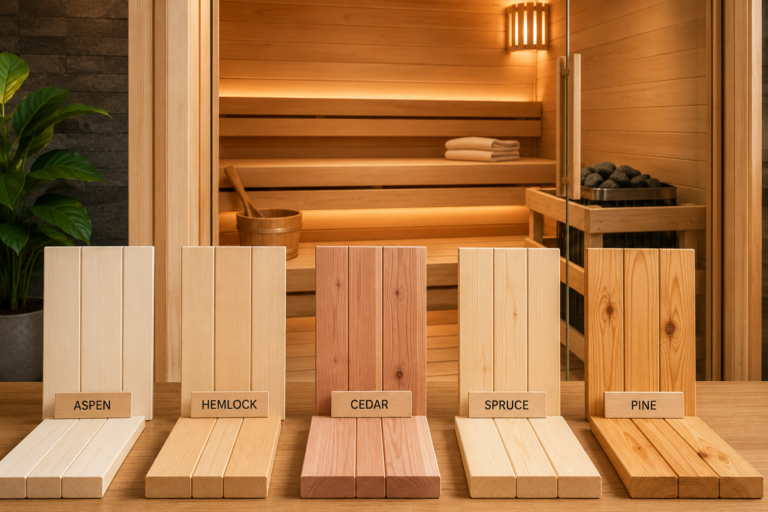
Common options include aspen, alder, cedar, and other species specifically selected for sauna applications.
Aspen is often chosen for its light color and relatively subtle grain. It can create a clean, contemporary appearance and is a popular option for sauna interiors.
Alder has a warm appearance and can complement both traditional and modern sauna designs.
Cedar is known for its distinctive aroma, natural color variations, and attractive grain. Its suitability depends on the specific species and product selected.
Hemlock is commonly used in sauna construction. Whether it is suitable for benches depends on the particular product’s surface quality, construction, and intended use.
| Wood Type | Appearance | Design Style | What to Consider |
|---|---|---|---|
| Aspen | Light and understated | Modern, minimalist | Check surface finish and board quality |
| Alder | Warm, even appearance | Traditional or contemporary | Match its color to the wall panels |
| Cedar | Distinctive grain and aroma | Rustic, premium | Consider aroma and natural color variation |
| Hemlock | Subtle, natural grain | Clean, simple interiors | Confirm suitability for direct-contact bench use |
There is no single best wood for every sauna. Choose a product intended for sauna benches, with a smooth finish and construction appropriate for repeated heat exposure.
Bench depth affects how comfortably users can sit and whether they can change position without feeling restricted.
A narrow bench may be adequate for upright sitting, while a deeper bench can offer more room to relax. However, deeper benches also occupy more floor space.
As a preliminary design reference, some residential sauna benches use depths in the approximate range of 16–24 inches (40–60 cm), depending on the seating level and intended use. This is not a universal specification; the final dimensions should be based on the user’s needs, available space, and the sauna design.
When planning bench depth, consider:
For custom installations, confirm dimensions with the sauna manufacturer or installer before construction.
Bench height affects comfort, access, and the temperature users experience.
In many traditional saunas, the upper bench is positioned higher than the lower bench because hotter air generally accumulates near the ceiling. The exact height depends on ceiling height, heater specifications, and the overall seating layout.
Consider the following when planning bench height:
Avoid choosing bench heights based on a generic diagram alone. The layout should be evaluated as a complete sauna system.
Both fixed and removable benches can work well. The right choice depends on how you intend to use and maintain the sauna.
Fixed benches are attached to the sauna structure and provide a permanent seating arrangement.
They can create a clean, integrated appearance and are often used in custom-built saunas.
The main consideration is access for cleaning underneath and around the bench structure.
Removable benches or lower bench sections can be lifted out when cleaning is needed.
This can make maintenance easier and provide more flexibility when the room is not in use.
However, removable components should be stable when installed and designed for the conditions inside the sauna.
| Feature | Fixed Bench | Removable Bench |
|---|---|---|
| Appearance | Integrated and permanent | Flexible and practical |
| Cleaning Access | Depends on the construction | Often easier underneath |
| Flexibility | Limited | Greater |
| Installation | Requires secure mounting | Needs stable placement |
| Best For | Custom, permanent layouts | Flexible or maintenance-focused designs |
Small saunas require careful use of every available inch.
A bench along one wall may be sufficient for a compact room, while a two-level arrangement may provide more seating options if the ceiling height and layout allow it.
To make a small sauna more practical:
A simple design often works better than trying to fit a large multi-sided arrangement into a limited area.
Larger saunas provide more flexibility for seating arrangements.
Depending on the room dimensions, you may consider two-level benches along one wall, an L-shaped layout, or a U-shaped arrangement.
When designing a larger seating area, consider how people will enter, sit down, and move around one another.
The layout should also preserve access to the heater and ensure that all seating positions comply with the heater manufacturer’s clearance requirements.
For group use, it can be helpful to plan the number of seats first and then determine the bench arrangement, rather than choosing a shape before considering capacity.
Lighting can make a significant difference to the appearance of sauna benches.
Hidden lighting beneath a bench or behind a backrest can emphasize the lines of the wood and create a softer visual effect.
Warm lighting is often paired with natural wood to create a welcoming atmosphere. However, every light fixture and its installation location must be suitable for the temperatures and conditions involved.
When planning lighting, ensure that wiring and fixtures do not interfere with bench supports, cleaning access, or required heater clearances.
Regular maintenance helps keep sauna benches clean and comfortable.
Follow the sauna manufacturer’s care instructions and consider these general practices:
Avoid applying ordinary paint or finishes to bench surfaces unless the product is specifically approved for that use. Users may have direct skin contact with the benches, so material selection and maintenance products matter.
Oversized benches can reduce the available floor area and make movement difficult.
A multi-level layout must provide appropriate clearance for seated users and work with the sauna’s overall design.
Not every interior wood product is designed for direct-contact sauna benches. Confirm its intended application.
Benches must not violate the required clearances around the heater.
A design that leaves inaccessible spaces can make routine maintenance harder.
Consider the entrance, steps, bench edges, and walking path before finalizing the layout.
Before building or purchasing sauna benches, review these factors.
| Planning Factor | What to Check |
|---|---|
| Sauna Size | Measure the room’s internal dimensions |
| Seating Capacity | Estimate how many people will use the sauna |
| Bench Layout | Choose single-level, two-level, L-shaped, or U-shaped seating |
| Bench Depth | Allow enough space for the intended sitting position |
| Bench Height | Consider ceiling clearance and access |
| Wood Material | Select a product intended for sauna bench use |
| Heater Clearance | Follow the heater manufacturer’s specifications |
| Ventilation | Keep required airflow paths clear |
| Cleaning | Ensure the area around and underneath benches is accessible |
| Lighting | Check fixture suitability and avoid glare |
| Safety | Make sure steps and seating are stable |
The best sauna bench design balances comfort, space, materials, and practical maintenance.
Single-level benches can work well in compact saunas, while two-level layouts provide more seating flexibility. L-shaped and U-shaped designs can suit larger rooms where group seating is a priority.
Wood selection is equally important. Aspen, alder, cedar, and other sauna-suitable materials each offer different appearances and characteristics, so choose a product designed for the intended application.
Before finalizing your design, measure the room carefully and coordinate the benches with the heater, door, ventilation, and lighting. Follow the manufacturer’s installation instructions and applicable local safety requirements.
A well-planned bench layout can make your sauna more comfortable, easier to maintain, and visually consistent with the rest of your home.
Aspen, alder, cedar, and other suitable wood species are used for sauna benches. The right choice depends on the desired appearance, surface quality, and manufacturer’s recommendations.
Two-level benches provide different seating heights and can make use of vertical space. Single-level benches may be more practical in compact rooms or where a simpler layout is preferred.
Yes. Removable benches can make cleaning easier and add flexibility, provided they are stable and suitable for sauna conditions.
Bench depth depends on the room, seating position, and user needs. Some residential designs use approximately 16–24 inches (40–60 cm), but the appropriate dimensions vary by layout.
Follow the manufacturer’s care instructions, clean the surfaces with suitable products, allow the room to dry appropriately, and inspect the bench structure regularly.