Newsletter Subscribe
Enter your email address below and subscribe to our newsletter

All voices matter
The sauna heater is the heart of a traditional sauna.
It determines how the room is heated and plays an important role in the overall sauna experience. Choosing the right heater therefore requires more than simply selecting the most powerful model available.
The correct heater depends on the size of the sauna, insulation, heater type, electrical requirements, installation location, and the manufacturer’s specifications.
Whether you are building a new home sauna or replacing an existing heater, understanding the basic differences can make the selection process much easier.
A sauna heater produces the heat required to bring the sauna room to its intended operating temperature.
Traditional sauna heaters may also heat sauna stones, which can be used to create steam when water is added according to the manufacturer’s instructions.
The heater affects several aspects of the sauna, including:
For this reason, the heater should be selected at the beginning of the sauna planning process.
There are several types of sauna heating systems.
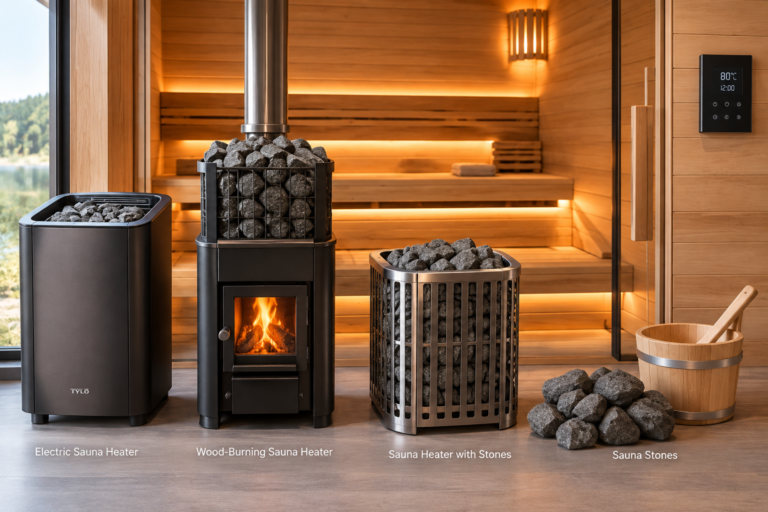
The two most common options for home traditional saunas are electric and wood-burning heaters.
Electric heaters are a popular choice for indoor home saunas.
They are generally convenient to operate and can be controlled using a dedicated control system, depending on the model.
Advantages can include:
However, electric heaters have specific electrical requirements.
The electrical circuit, wiring, breaker, and installation must be appropriate for the selected heater.
Wood-burning heaters provide a more traditional sauna experience.
They use firewood to generate heat and typically require a chimney or flue system.
A wood-burning heater may be attractive for outdoor sauna cabins or locations where this type of installation is practical.
However, installation is more complex than an electric heater.
You need to consider:
A qualified professional should handle installations where required.
One of the most important factors is heater capacity.
A heater that is too small may struggle to heat the room effectively.
A heater that is unnecessarily large may not be the most appropriate choice either.
The required capacity depends on the sauna’s volume and construction.
Important factors include:
Always use the manufacturer’s recommended sauna volume range rather than selecting a heater based only on wattage.
A small sauna requires less heating capacity than a large sauna.
For example, a compact home sauna may use a relatively small heater, while a larger family sauna requires substantially more capacity.
The ceiling height also matters.
A room with a higher ceiling contains more air volume and may require a different heater specification.
Calculate the sauna volume before comparing heaters.
Sauna volume = Length × Width × Height
The result can then be compared with the heater manufacturer’s recommended room size.
The physical volume of the sauna is not the only factor.
Large glass panels and doors can influence heating requirements because glass does not provide the same thermal characteristics as an insulated wall.
The same applies to certain exterior walls and other construction elements.
When selecting a heater, check whether the manufacturer provides adjustments or recommendations for large glass areas.
Electric sauna heaters require careful installation.
Depending on the model, installation may involve:
Never assume that an existing household electrical outlet is sufficient.
The heater’s installation manual should be followed carefully, and electrical work should be performed by a qualified electrician where required.
Modern electric sauna heaters can offer different control options.
Some use controls directly on the heater.
Others use a separate wall-mounted control panel.
Depending on the system, controls may allow users to adjust:
A separate control panel can provide a cleaner appearance and make operation more convenient.
Many traditional sauna heaters are designed to hold sauna stones.
The stones absorb heat from the heater and can contribute to the characteristic sauna experience.
However, not every stone is suitable for every heater.
Use the type and quantity of stones recommended by the manufacturer.
Do not overload the heater with additional stones simply because there appears to be available space.
Proper stone placement can affect airflow and heater performance.
When purchasing sauna stones, consider:
Inspect stones periodically.
Cracked or deteriorated stones may need replacement.
Always handle sauna stones only when they are completely cool.
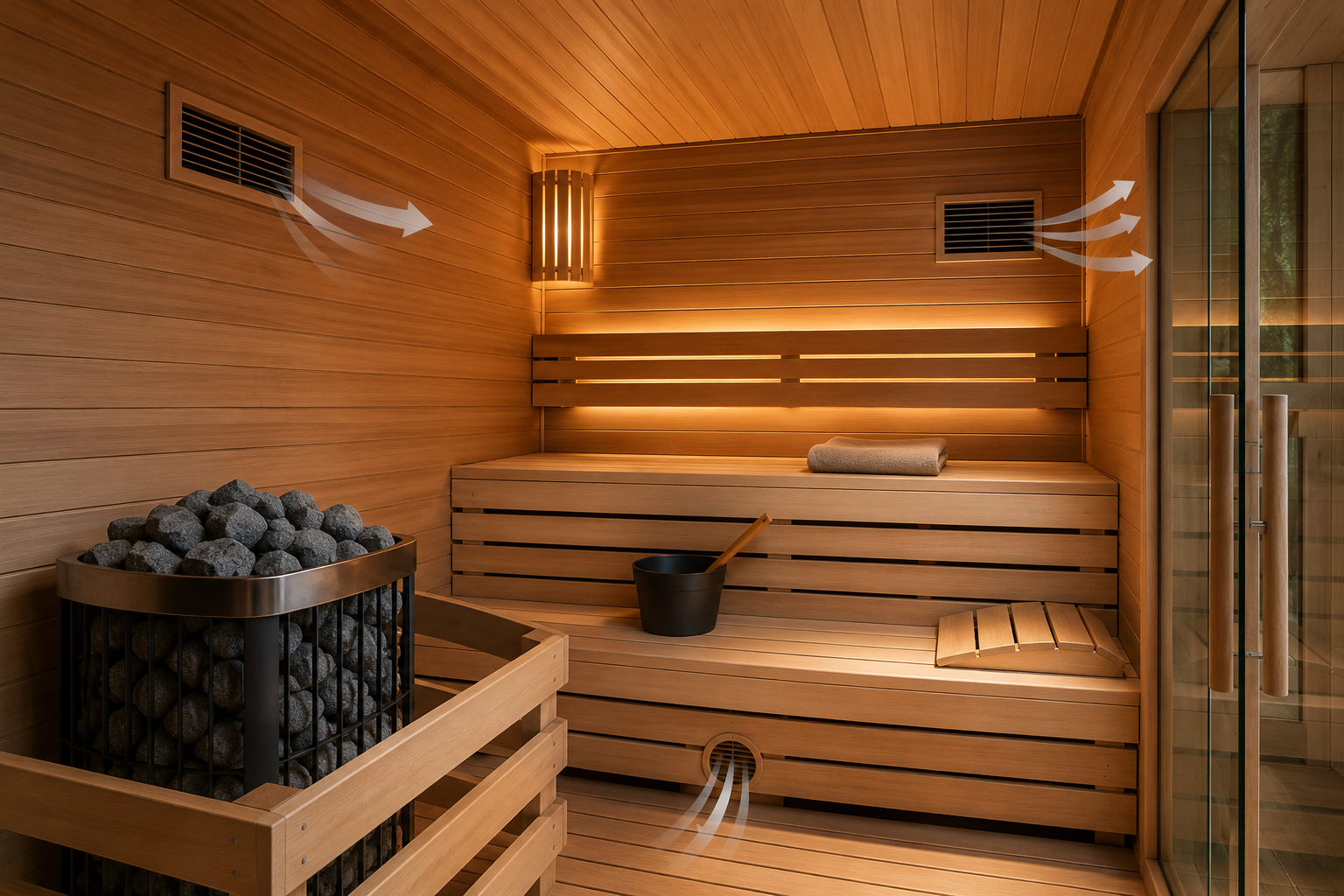
The heater and ventilation system should be planned together.
Air movement affects how heat is distributed throughout the sauna.
The location of the heater, air intake, exhaust, benches, and door should work as part of one system.
This is especially important when designing a new sauna.
Changing the heater position later may require changes to other components.
Safety should always be the first priority.
Keep the required clearance around the heater.
Do not place towels, clothing, wooden accessories, or other combustible materials directly on or next to the heater.
The heater should be installed according to the manufacturer’s instructions.
A protective railing may also be appropriate depending on the heater design and sauna layout.
An undersized heater may take longer to heat the sauna and may struggle to reach the intended operating conditions.
Wattage alone does not tell you whether a heater is appropriate for your room.
Large glass surfaces can affect the heating requirements.
Use the recommended quantity and arrangement.
Required clearances must be respected.
Electric heaters can require dedicated circuits and professional installation.
The heater should be selected according to the final sauna dimensions and construction.
When comparing different models, look at more than the price.
Consider:
| Feature | Why It Matters |
|---|---|
| Recommended sauna volume | Helps match heater capacity to the room |
| Heater type | Determines installation and operation |
| Power | Determines heating capability |
| Stone capacity | Affects traditional sauna operation |
| Controls | Influences convenience |
| Required clearances | Important for safe installation |
| Electrical requirements | Determines installation needs |
| Warranty | Useful for long-term ownership |
| Construction | Can affect durability |
| Manufacturer support | Helpful for installation and maintenance |
For many homeowners, the choice comes down to convenience versus traditional operation.
An electric heater can be practical for an indoor home sauna where electrical infrastructure is available.
A wood-burning heater can be appealing for an outdoor sauna where a chimney and firewood storage can be accommodated.
Neither option is automatically better.
The right choice depends on the location, construction, regulations, and personal preferences.
Heating time varies significantly.
It depends on:
Rather than relying on a universal heating time, follow the manufacturer’s specifications for your particular heater.
Regular inspection can help keep the heating system operating properly.
For an electric heater:
For a wood-burning heater:
Maintenance requirements vary by model.
A heater may eventually require replacement because of age, wear, corrosion, electrical problems, or damaged components.
Warning signs can include:
If you notice a serious problem, stop using the heater and have it inspected by a qualified professional.
There is no universal best heater. The appropriate model depends on sauna volume, construction, heater type, electrical availability, and manufacturer specifications.
Start by calculating the sauna’s interior volume using length × width × height. Then compare the result with the heater manufacturer’s recommended sauna volume range.
Electric heaters are often convenient for indoor installations, while wood-burning heaters can provide a traditional experience and are commonly considered for outdoor saunas. The best option depends on the installation.
Use the stone quantity specified by the heater manufacturer. Avoid adding extra stones beyond the recommended capacity.
Installation requirements vary by heater type and location. Electrical and wood-burning installations may require qualified professionals and must comply with applicable local requirements.
Choosing the right sauna heater is one of the most important decisions when building a traditional sauna.
Start with the sauna’s size and construction, then consider heater type, power requirements, stone capacity, controls, clearances, and installation requirements.
Electric heaters can provide convenient operation for many home installations, while wood-burning heaters offer a more traditional approach where their installation is practical.
Most importantly, do not choose a heater based solely on price or power.
Match the heater to the sauna room and follow the manufacturer’s installation and safety requirements.
A properly selected and installed heater can become the foundation of a comfortable and reliable home sauna.