Newsletter Subscribe
Enter your email address below and subscribe to our newsletter

All voices matter
Category: Outdoor Saunas
An outdoor sauna can turn an ordinary backyard into a private place to relax, warm up, and unwind. Compared with an indoor sauna, it also gives homeowners more freedom with size, layout, and design without taking up space inside the house.
But choosing an outdoor sauna is not only about appearance. The type of sauna, heater, materials, foundation, climate, ventilation, and maintenance all affect how comfortable it is to use and how well it holds up over time.
If you’re considering adding one to your property, here’s what to think about before making a decision.
One of the biggest advantages of an outdoor sauna is flexibility.
Instead of remodeling a bathroom, basement, or spare room, you can create a dedicated sauna space in the backyard. This can be especially useful for homes where indoor space is limited.
Outdoor saunas can also become part of a larger wellness area. Many homeowners place them near a patio, pool, outdoor shower, cold plunge, or seating area.
The result is not just a sauna—it becomes part of the way you use your backyard.
Outdoor saunas come in several common designs, and each works best in different situations.
Barrel saunas are compact and recognizable by their curved shape. Their smaller internal volume can help them warm up relatively quickly, making them a popular choice for smaller backyards.
However, the curved walls can reduce standing height and usable bench space.
Cabin-style saunas look more like small garden buildings. Their rectangular shape provides more headroom, larger benches, and greater flexibility with the interior layout.
They are often a better choice for families or homeowners who regularly expect several people to use the sauna.
Pod saunas combine some of the compactness of a barrel sauna with additional interior height. Their distinctive shape can work well in modern landscapes.
Large glass panels can make an outdoor sauna feel more open and are especially attractive on properties with mountain, lake, forest, or garden views.
The trade-off is that more glass may reduce heat efficiency compared with heavily insulated wooden walls.
| Outdoor Sauna Type | Best For | Main Advantages | Things to Consider |
|---|---|---|---|
| Barrel Sauna | Small backyards, couples | Compact, distinctive, quick to heat | Less headroom and bench space |
| Cabin Sauna | Families, larger spaces | Spacious interior, flexible layout | Larger footprint and usually higher cost |
| Pod Sauna | Modern gardens | Stylish design, good interior height | Fewer models and sizes available |
| Panoramic Glass Sauna | Scenic properties | Excellent views, premium appearance | Increased heat loss through glass |
| Custom Outdoor Sauna | Unique properties | Fully customizable | Higher cost and longer installation process |
Before buying an outdoor sauna, think realistically about how many people will use it.
A compact two-person sauna may work well for couples, while families may prefer a four- or six-person model.
Don’t only measure the sauna itself. Leave enough room around it for:
A sauna that technically fits into a corner of the yard may still feel inconvenient if there is no room to comfortably enter, maintain, or use the surrounding area.
Internal link opportunity: Link “home sauna size” to your article about choosing the right sauna size.
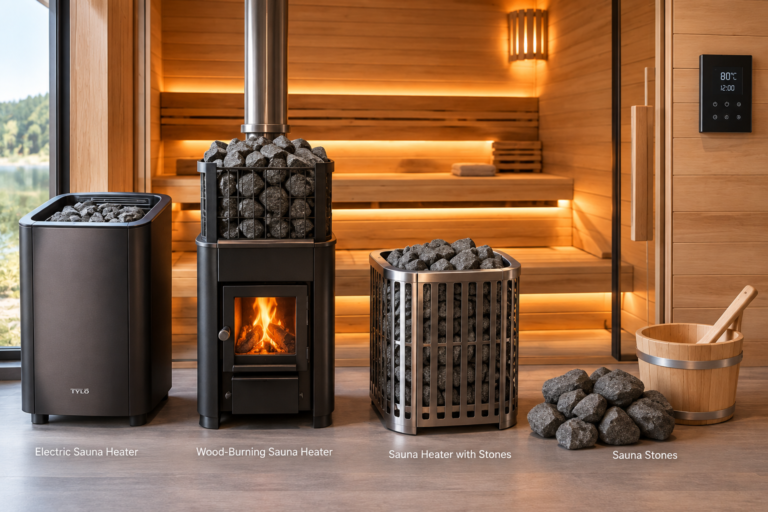
The heater plays a major role in how an outdoor sauna feels and how easy it is to operate.
Electric sauna heaters are convenient and easy to control. You can set the temperature, allow the sauna to heat, and maintain relatively consistent conditions throughout the session.
They work particularly well for residential properties with suitable electrical access.
The main consideration is installation. Larger heaters may require dedicated wiring or professional electrical work.
Wood-burning sauna stoves create a more traditional atmosphere and are especially popular for cabins, rural homes, and outdoor saunas.
They provide strong heat and do not depend entirely on electrical heating elements.
However, you’ll need to consider:
If you’re still deciding between heater types, visit our Sauna Heaters section for more detailed comparisons.
Internal link: Sauna Heaters
An outdoor sauna experiences rain, humidity, snow, sunlight, and changing temperatures, so materials matter more than they do in many indoor installations.
Common sauna woods include:
Cedar is a popular option because of its appearance, aroma, and natural suitability for warm and humid environments.
The exterior should also have appropriate weather protection. Good roofing, drainage, flashing, and exterior treatment can make a major difference in the sauna’s lifespan.
Every outdoor sauna needs a stable, level base.
Common foundation options include:
The right foundation depends on the sauna’s weight, local soil, drainage, and climate.
Avoid placing the sauna directly on soft or consistently wet ground. Moisture beneath the structure can create long-term problems for both the foundation and the wood.
Placement also affects convenience. A sauna located reasonably close to the house is easier to use during winter or bad weather.
At the same time, positioning it farther into the garden may create a quieter and more private experience.
Proper airflow is essential in a sauna.
Ventilation helps bring fresh air into the room, supports comfortable heat distribution, and allows moisture to escape after use.
Outdoor saunas generally need both an air intake and an exhaust vent, although the ideal locations depend on the heater and sauna design.
Poor ventilation can make a sauna feel uncomfortable even when the temperature appears correct.
Internal link: Link this section to Sauna Ventilation Guide: Why Airflow Matters in a Home Sauna.
Outdoor saunas require slightly more maintenance than indoor models because the structure is constantly exposed to the weather.
Regularly inspect:
Inside, allow benches and wooden surfaces to dry after each session.
Occasional gentle cleaning can help prevent sweat stains and dirt buildup. Avoid harsh household cleaners or finishes that are not designed for heated sauna environments.
There is no single price for an outdoor sauna.
A compact prefabricated barrel sauna may cost considerably less than a large custom cabin with panoramic glass, upgraded lighting, premium wood, and a powerful heater.
Remember that the sauna itself is only part of the budget.
Additional costs may include:
When comparing different models, look at the total installed cost, not just the advertised sauna price.
The best outdoor sauna is the one that fits your property, climate, budget, and the way you actually plan to use it.
Before buying, compare the size, construction materials, heater type, insulation, ventilation, installation requirements, and ongoing maintenance.
A little planning before installation can prevent expensive changes later and help create a sauna that feels like a natural part of your backyard rather than an afterthought.
For homeowners still comparing indoor and outdoor options, read our guide to Indoor vs. Outdoor Sauna: Which Is Right for Your Home?