Newsletter Subscribe
Enter your email address below and subscribe to our newsletter

All voices matter
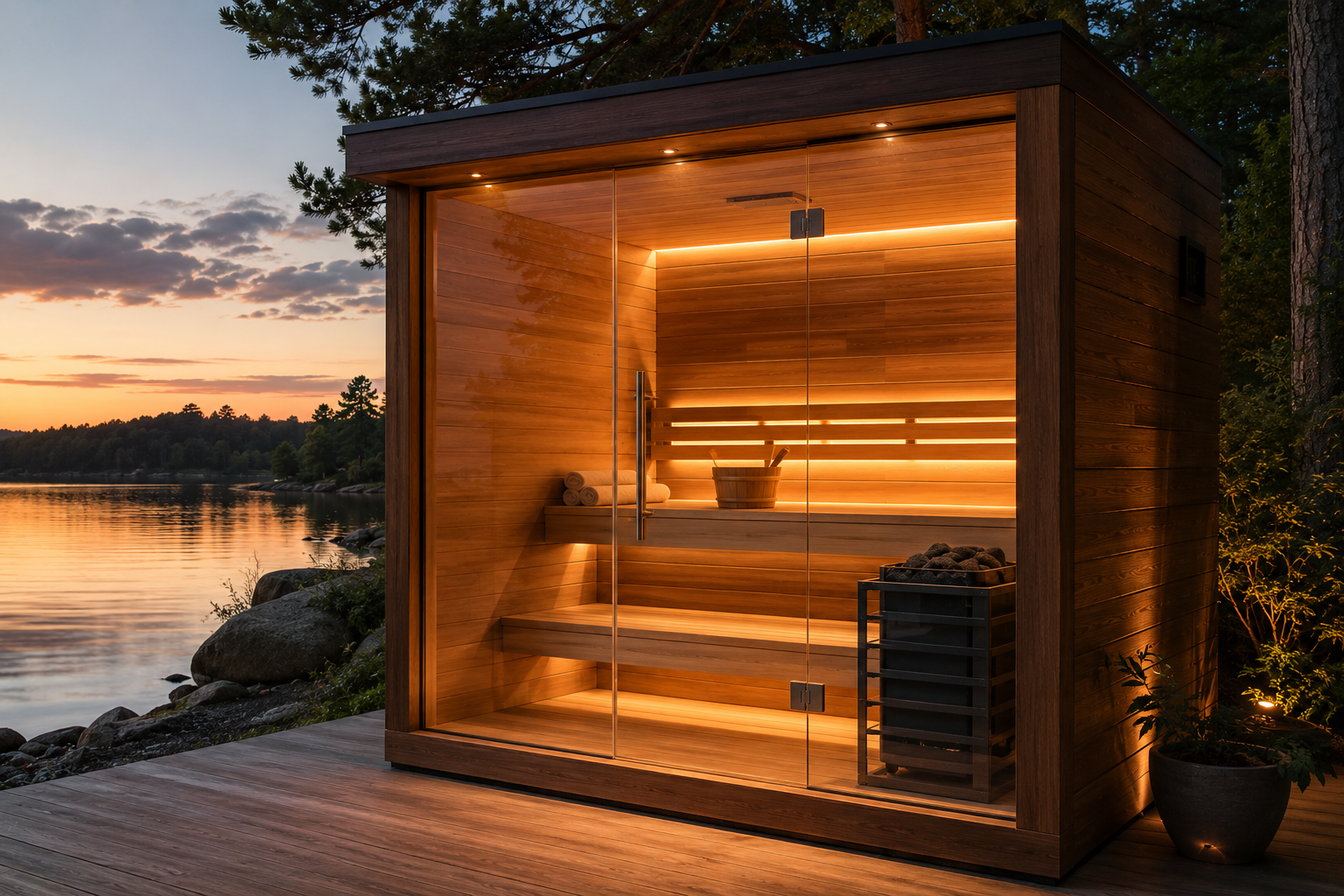
Adding a sauna to your home can create a comfortable space for relaxation, but choosing the right model requires more than simply picking the largest or most attractive option.
Home saunas are available in different sizes, heating systems, materials, layouts, and installation styles. The best choice depends on your available space, preferred sauna experience, budget, and how often you expect to use it.
Before buying a home sauna, it is worth considering several important factors.
The first step is choosing the location.
Home saunas can be installed in different areas, including bathrooms, basements, garages, spare rooms, home gyms, and outdoor spaces.
An indoor sauna may be more convenient if you want quick access from inside your home. An outdoor sauna can be a better option when indoor space is limited or when you want to create a separate relaxation area.
Before purchasing, measure the available space carefully.
Consider more than the sauna’s exterior dimensions. You should also leave enough room around the unit for installation, ventilation, electrical connections, maintenance, and opening the door comfortably.
One of the biggest decisions is choosing the heating system.
The most common options for home use include traditional saunas and infrared saunas.
Traditional saunas use a heater to warm the air inside the sauna. The heater usually works with sauna stones, and users can add water to the stones to increase humidity.
Traditional saunas are a good option for people who enjoy a classic hot-sauna experience.
Infrared saunas use infrared heaters rather than heating the entire room in the same way as a traditional sauna.
They generally operate at lower air temperatures and can have different installation and electrical requirements.
Neither option is automatically the best for every homeowner. Your choice should depend on the type of experience you prefer.
Sauna size should match the number of people who will normally use it.
A compact one-person sauna can work well when space is limited. A two-person sauna provides more room without requiring a large dedicated area.
For families or people who regularly want to use the sauna with friends, a larger model may be more practical.
Common configurations include:
Remember that the advertised capacity does not always tell you how spacious the sauna will feel.
Check the interior dimensions, bench width, bench height, and available legroom before making a decision.
The materials used inside a sauna can affect its appearance, durability, and overall experience.
Wood is the most common material for sauna interiors. Popular options include cedar, hemlock, spruce, and other suitable woods.
When comparing different models, look at:
The quality of construction can be just as important as the appearance of the sauna.
A sauna that looks attractive in photographs may not necessarily have the same level of construction as a better-designed model.
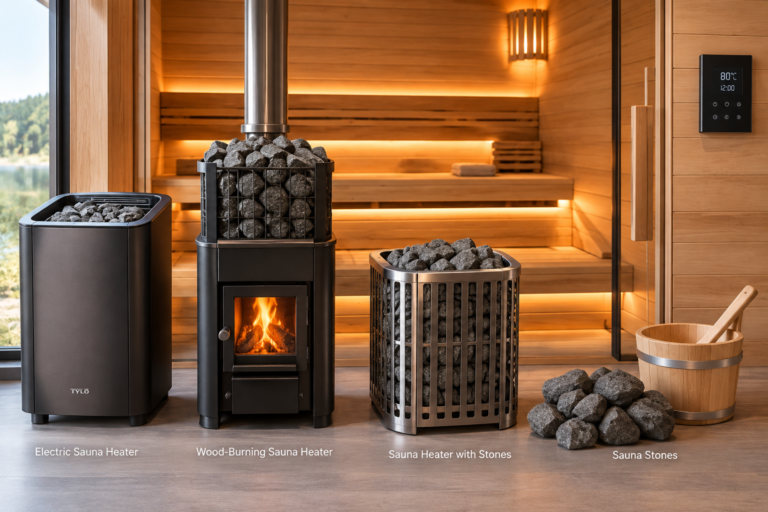
The heater is one of the most important components of a traditional sauna.
When comparing traditional sauna models, check the heater’s power, control system, stone capacity, and installation requirements.
Some saunas have integrated controls, while others use external control panels.
You should also check whether the heater is included with the sauna or needs to be purchased separately.
If electrical installation is required, make sure your home’s electrical system is suitable for the equipment and consult a qualified professional when necessary.
Ventilation is an important part of sauna design.
A well-planned ventilation system can help maintain appropriate airflow and improve the overall sauna environment.
When comparing models, look for information about air intake and exhaust locations.
For custom-built saunas, ventilation should be considered during the planning stage rather than added as an afterthought.
This is an easy detail to overlook.
Even if a sauna fits perfectly in the intended room, you still need to get it into the house.
Before ordering a large prefabricated sauna, measure:
Check whether the sauna arrives fully assembled or in separate panels.
A modular or panelized design may be easier to move into difficult spaces.
Indoor and outdoor saunas have different requirements.
Indoor saunas are convenient and protected from outdoor weather.
They can be installed in spaces such as:
However, you need to consider ventilation, electrical requirements, moisture management, and available floor space.
Outdoor saunas can create a dedicated relaxation area in a backyard, garden, or other suitable outdoor location.
They need to be designed to handle changing weather conditions.
When considering an outdoor model, pay particular attention to:
The purchase price is only one part of the overall cost.
Depending on the model, you may also need to budget for:
For this reason, it is useful to calculate the expected installation cost before choosing a sauna.
A less expensive sauna may not necessarily be the cheaper option after all additional costs are considered.
Modern home saunas can include a variety of features.
Depending on the model, you may find:
Features can make a sauna more convenient, but they should not replace the fundamentals.
Start with construction quality, heater performance, dimensions, ventilation, and installation requirements before considering optional features.
A home sauna requires regular cleaning and basic maintenance.
Wooden benches and interior surfaces should be kept clean and dry. The sauna should also be allowed to dry properly after use.
Traditional sauna heaters and stones may require periodic inspection according to the manufacturer’s instructions.
Choosing a sauna with accessible components can make future maintenance easier.
Before making your final decision, compare the most important specifications side by side.
| Feature | What to Check |
|---|---|
| Size | Exterior and interior dimensions |
| Capacity | Number of comfortable users |
| Heater | Type, power, and controls |
| Materials | Wood type and construction |
| Ventilation | Air intake and exhaust |
| Installation | Electrical and assembly requirements |
| Location | Indoor or outdoor suitability |
| Maintenance | Cleaning and replacement requirements |
| Warranty | Coverage and duration |
| Total Cost | Sauna plus installation expenses |
Looking at these factors together can make it easier to compare different models.
One common mistake is choosing a sauna based only on its appearance.
A beautiful exterior does not tell you everything about construction quality or performance.
Another mistake is purchasing a sauna without measuring the installation route. A sauna that fits inside a room may still be difficult to transport through a narrow doorway or staircase.
It is also worth avoiding models that provide limited information about their heater, materials, electrical requirements, or warranty.
Good product information makes it easier to understand what you are actually buying.
Choosing the best home sauna starts with understanding your space and deciding what type of sauna experience you want.
Consider the installation location, sauna type, capacity, materials, heater, ventilation, electrical requirements, and total cost before making a purchase.
A well-chosen sauna should fit comfortably into your space while providing the features and heating experience you expect.
Instead of focusing on one specification, compare the complete package. Taking the time to evaluate different models carefully can help you find a home sauna that works well for your space and your long-term needs.