Newsletter Subscribe
Enter your email address below and subscribe to our newsletter

All voices matter
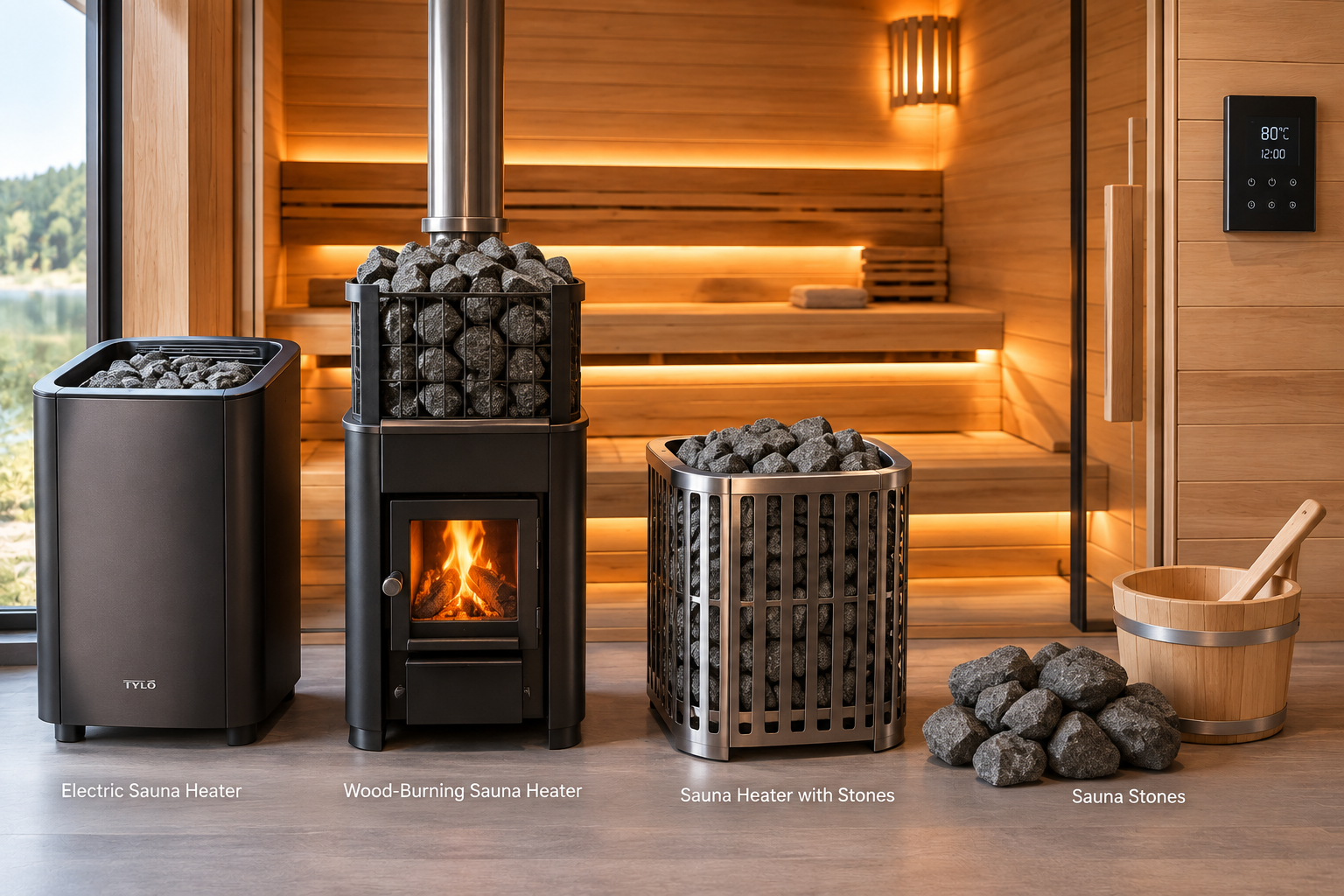
A sauna heater is one of the most important components of any sauna room. It determines how the space is heated and plays a major role in the overall sauna experience.
Whether you are building a small home sauna or planning a larger custom sauna room, choosing the right sauna heater requires more than simply selecting the most powerful model available.
The size of the sauna, insulation, ceiling height, amount of glass, heater type, electrical requirements, and personal preferences should all be considered before making a decision.
This guide explains the main types of sauna heaters and the factors you should consider when choosing one for your home sauna.
The heater is responsible for creating the high-temperature environment that defines a traditional sauna.
A properly selected heater should be able to heat the sauna efficiently while providing a comfortable and consistent experience.
The right heater can help provide:
An incorrectly sized heater, on the other hand, may take too long to heat the room or struggle to maintain the desired temperature.
Home saunas generally use one of several common heating approaches.
Electric heaters are among the most convenient choices for residential sauna rooms.
They are relatively easy to operate and can be controlled using a thermostat or digital control system, depending on the model.
An electric heater can be a practical choice for:
Because electrical requirements vary between heater models, installation should follow the manufacturer’s specifications and applicable local electrical requirements.
Wood-burning sauna heaters use firewood as their heat source.
They are often associated with traditional sauna experiences and can create a distinctive atmosphere.
A wood-burning sauna may be particularly attractive for an outdoor sauna or a property where a suitable chimney and ventilation system can be installed.
However, these systems require additional considerations such as:
For indoor installations, professional planning is especially important.
The two systems offer very different installation and operating experiences.
| Feature | Electric Sauna Heater | Wood-Burning Sauna Heater |
|---|---|---|
| Operation | Push-button or digital controls | Requires firewood |
| Installation | Requires suitable electrical connection | Requires stove, chimney, and ventilation |
| Convenience | High | More hands-on |
| Atmosphere | Clean and modern | Traditional and rustic |
| Indoor Use | Common choice | Requires careful planning |
| Outdoor Use | Suitable | Popular for traditional outdoor saunas |
| Maintenance | Generally straightforward | Requires ash and chimney maintenance |
| Fuel | Electricity | Firewood |
| Temperature Control | Easy to adjust | Manual adjustment |
| Best For | Convenient home sauna use | Traditional sauna experience |
There is no universally best option. The right choice depends on your sauna design, available utilities, installation location, and preferred sauna experience.
One of the most important decisions is selecting the appropriate heater capacity.
A heater that is too small may struggle to bring the sauna to the desired temperature.
A heater that is unnecessarily large may increase installation requirements and energy use without providing a meaningful advantage.
The correct capacity depends on the volume of the sauna room, not simply the floor area.
For this reason, calculate the approximate room volume before choosing a heater.
Sauna Volume = Length × Width × Height
For example, if a sauna measures:
The approximate room volume is:
6 × 5 × 7 = 210 cubic feet
However, room volume alone does not tell the complete story.
Glass doors, glass walls, poor insulation, ceiling height, and other design features can affect the heating requirements. Always use the heater manufacturer’s recommended sizing method.
Modern sauna rooms often include glass doors or large glass panels.
Glass can have different thermal characteristics from insulated wooden walls, so a sauna with extensive glass may require additional heating capacity compared with a fully insulated wood enclosure of the same basic dimensions.
This is especially important when designing:
When calculating heater requirements, follow the manufacturer’s guidance for glass surfaces and other construction factors.
Many traditional electric sauna heaters are designed to hold sauna stones.
These stones are an important part of the traditional sauna experience.
When water is poured over appropriately designed sauna stones, it produces a burst of steam and changes the feel of the heat.
The amount and type of stones should always follow the heater manufacturer’s recommendations.
Do not use random rocks or materials that are not intended for sauna heaters, as they may crack or react unpredictably when exposed to high temperatures.
Electric sauna heaters are available in different designs.
Wall-mounted models can save floor space and work well in compact sauna rooms.
They can be useful when maximizing seating and walking space is important.
Floor-standing heaters generally occupy more floor space but can offer larger stone capacity and become a visual feature of the sauna.
They can be especially suitable for larger sauna rooms.
For a compact home sauna, space efficiency is often one of the most important considerations.
A smaller sauna may benefit from a compact wall-mounted electric heater.
Before purchasing, consider:
Avoid choosing a heater solely because it has a small physical footprint. Heating capacity and installation requirements are equally important.
Larger sauna rooms generally require a heater designed for a greater room volume.
A large sauna may also have:
These factors can influence the required heater capacity.
For a custom sauna, it is a good idea to determine the room specifications before purchasing the heater rather than trying to fit the room around an already-selected heater.
Modern sauna heaters can include a variety of features.
Depending on your needs, you may want to consider:
Digital controls make it easier to set and monitor the desired temperature.
Timer functions can provide additional convenience for scheduled operation.
Some systems allow the heater to be controlled from outside the sauna.
A larger stone capacity can influence the sauna’s heat and steam characteristics.
A compact heater can help preserve valuable floor space in smaller sauna rooms.
Safety should always be a priority when installing a sauna heater.
The heater should be installed according to the manufacturer’s instructions, including required clearances from benches, walls, doors, and other materials.
Important considerations include:
For electrical or structural work, use appropriately qualified professionals where required.
Never place towels, clothing, wood products, or other combustible materials directly on or immediately around the heater.
Room dimensions should be established before selecting the heater.
A large amount of glass can affect heating requirements.
The cheapest heater may not be the best fit for the sauna’s size or intended use.
Different heaters can require different electrical configurations. Confirm requirements before installation.
The heater needs the manufacturer’s specified safety clearances.
Only use stones recommended for sauna-heater applications.
Before purchasing your heater, review the following:
| Factor | What to Check |
|---|---|
| Sauna Size | Calculate the room’s approximate volume |
| Heater Type | Choose electric or wood-burning |
| Installation | Check electrical, chimney, and ventilation requirements |
| Glass | Account for large glass surfaces |
| Controls | Decide between built-in, wall, or remote controls |
| Stone Capacity | Check the recommended stone type and quantity |
| Clearance | Follow required distances around the heater |
| Location | Make sure the heater fits the planned layout |
| Safety | Follow manufacturer and local requirements |
| Future Use | Consider how many people will regularly use the sauna |
This checklist can help you compare different heater options before making a final decision.
For many homeowners, an electric sauna heater can be a convenient solution because it offers simple operation and straightforward temperature control.
For homeowners who prioritize a traditional atmosphere and have a suitable outdoor installation location, a wood-burning heater may be an attractive alternative.
The best home sauna heater is ultimately the one that matches the sauna’s size, construction, available utilities, design, and intended use.
Choosing the right sauna heater is an important step in creating a comfortable and efficient home sauna.
Start by calculating the sauna’s volume, then consider the amount of glass, insulation, ceiling height, available electrical or fuel options, and the type of sauna experience you want.
Electric heaters are convenient and versatile for many residential applications, while wood-burning heaters can provide a more traditional experience when the installation environment allows for them.
Most importantly, do not choose a heater based only on appearance or price. The heater should be correctly sized and installed according to the manufacturer’s specifications and applicable local requirements.
A well-matched heater can become the heart of your sauna, helping create the comfortable heat and relaxing atmosphere that make a sauna worth enjoying.