Newsletter Subscribe
Enter your email address below and subscribe to our newsletter

All voices matter
Using a sauna can be a relaxing part of a wellness routine, but spending more time inside does not necessarily mean having a better experience.
For beginners especially, it is useful to understand how long a typical sauna session lasts, how to recognize when it is time to leave, and how to gradually become more comfortable with the heat.
The ideal sauna session can vary depending on the type of sauna, temperature, personal tolerance, and experience level. Instead of focusing on a specific maximum time, it is better to approach sauna use gradually and pay attention to how you feel.
Many sauna sessions last approximately 10 to 20 minutes.
Some experienced sauna users may stay longer, while beginners may prefer shorter sessions.
The length of a session can depend on:
There is no single duration that is appropriate for everyone.
If you are new to sauna use, starting with a shorter session can make it easier to understand how your body responds to the heat.
Beginners generally do not need to stay in the sauna for a long time.
A shorter session allows you to become familiar with the heat without trying to tolerate an unnecessarily intense environment.
You might begin with around 5 to 10 minutes, then gradually adjust future sessions based on comfort.
The goal is not to stay inside for as long as possible.
A comfortable session is generally more useful than trying to reach a particular time target.
When you enter a traditional sauna, your body is exposed to a high-temperature environment.
As the session continues, you may notice:
These are normal responses to a hot environment.
However, if you begin to feel uncomfortable, dizzy, weak, nauseated, confused, or unusually unwell, leave the sauna and cool down.
Do not try to extend a session simply because you have not reached a predetermined time.
Yes.
A hotter sauna can feel considerably more intense than a lower-temperature sauna.
For example, a session in a moderately heated sauna may feel very different from a session at a much higher temperature.
Humidity can also change how the heat feels.
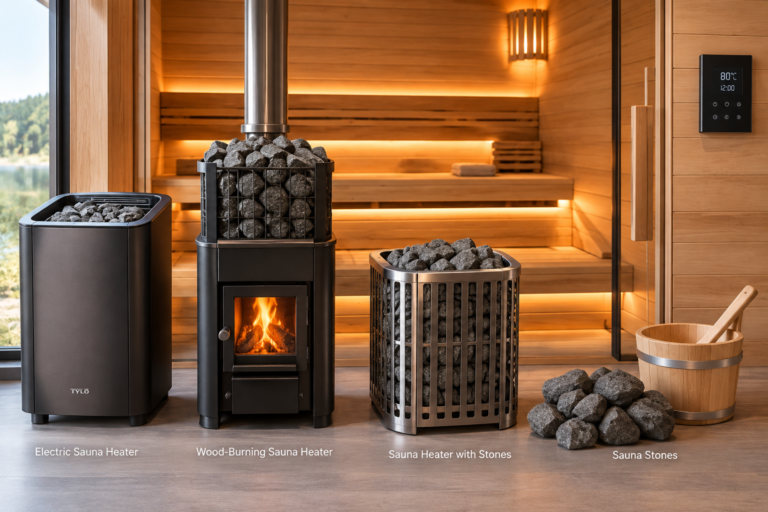
In a traditional sauna, adding water to heated sauna stones increases humidity temporarily and can make the heat feel stronger.
Because of this, sauna temperature and humidity should both be considered when deciding how long a session feels comfortable.
Many sauna users prefer to take a cooling or resting break between sessions.
Instead of staying inside continuously for a long period, a session can be followed by time outside the sauna.
During a break, you can:
Taking a break can make the overall experience more comfortable than trying to remain inside continuously.
Sauna frequency depends on the individual and how the sauna is being used.
Some people use a sauna several times per week, while others use it less frequently.
If you are new to sauna use, starting gradually can help you understand your personal tolerance.
Your routine can also depend on:
Consistency and comfort are generally more important than trying to use a sauna as often as possible.
Hydration is an important consideration because sauna sessions involve sweating.
It is sensible to drink fluids regularly throughout the day and pay attention to thirst.
After a sauna session, replacing fluids can also be useful, particularly if you have been sweating heavily.
Avoid treating sauna use as a substitute for normal hydration.
If you have specific medical or dietary considerations, consult an appropriate healthcare professional about whether sauna use is suitable for you.
You should not feel obligated to remain inside until a timer reaches a particular number.
Leave the sauna if you experience symptoms such as:
Once outside, move to a cooler environment and allow yourself to recover.
If symptoms are severe, persistent, or concerning, seek appropriate medical attention.
Not necessarily.
A longer session means longer exposure to heat, but that does not automatically make the experience better.
For many users, a moderate session followed by a rest period may be more comfortable than staying inside continuously.
Instead of asking, “What is the longest time I can stay?”
A better question is:
“What session length feels comfortable and appropriate for me?”
This approach allows you to develop a routine without unnecessarily pushing your heat tolerance.
There is no universal rest period that applies to every person.
Give yourself enough time to cool down and feel comfortable before deciding whether to return to the sauna.
Some people prefer several minutes of rest, while others take longer.
If you feel tired or uncomfortable, there is no need to continue with another session.
If you are new to sauna use, these simple habits can make the experience easier.
Begin with a shorter session rather than trying to match experienced users.
Comfort is more important than reaching a specific time.
Drink fluids regularly and replace fluids after heavy sweating.
Rest outside the sauna instead of remaining inside continuously.
Alcohol can affect hydration and your body’s response to heat. Avoid combining alcohol with sauna use.
Choose a temperature and humidity level that feels manageable rather than trying to create the most intense environment possible.
Trying to extend a session beyond your comfort level can make the experience unpleasant.
Someone who regularly uses a sauna may tolerate heat differently from a beginner.
Feeling dizzy or unwell is a reason to leave the sauna, not a reason to continue.
Continuous heat exposure may be less comfortable than taking breaks between sessions.
A timer is useful, but it should not replace awareness of how you feel.
A beginner can start with a short session, such as 5 to 10 minutes, and gradually adjust based on comfort.
A 20-minute session can be within the range used by many sauna users, but suitability varies depending on temperature, humidity, individual tolerance, and other factors.
Long continuous sessions are not necessary for most users. It is generally better to take breaks and leave the sauna if you feel uncomfortable.
There is no universal schedule. Some people use a sauna several times per week, while others use it less frequently.
Allowing yourself to cool down and rest after a sauna session can be a comfortable way to transition back to normal activities.
There is no single sauna session length that works for everyone.
Beginners may prefer shorter sessions, while experienced users may be comfortable with longer periods. Temperature, humidity, sauna type, hydration, and individual heat tolerance can all affect how a session feels.
The most important principle is to avoid treating sauna time as a competition.
Start gradually, take breaks, stay hydrated, and leave the sauna whenever you feel uncomfortable or unwell. By paying attention to your own response to heat, you can develop a sauna routine that fits comfortably into your lifestyle.