Newsletter Subscribe
Enter your email address below and subscribe to our newsletter

All voices matter
When choosing a sauna for your home, one of the first decisions is whether to choose a traditional sauna or an infrared sauna.
Although both are designed to create a heated environment, they work in different ways.
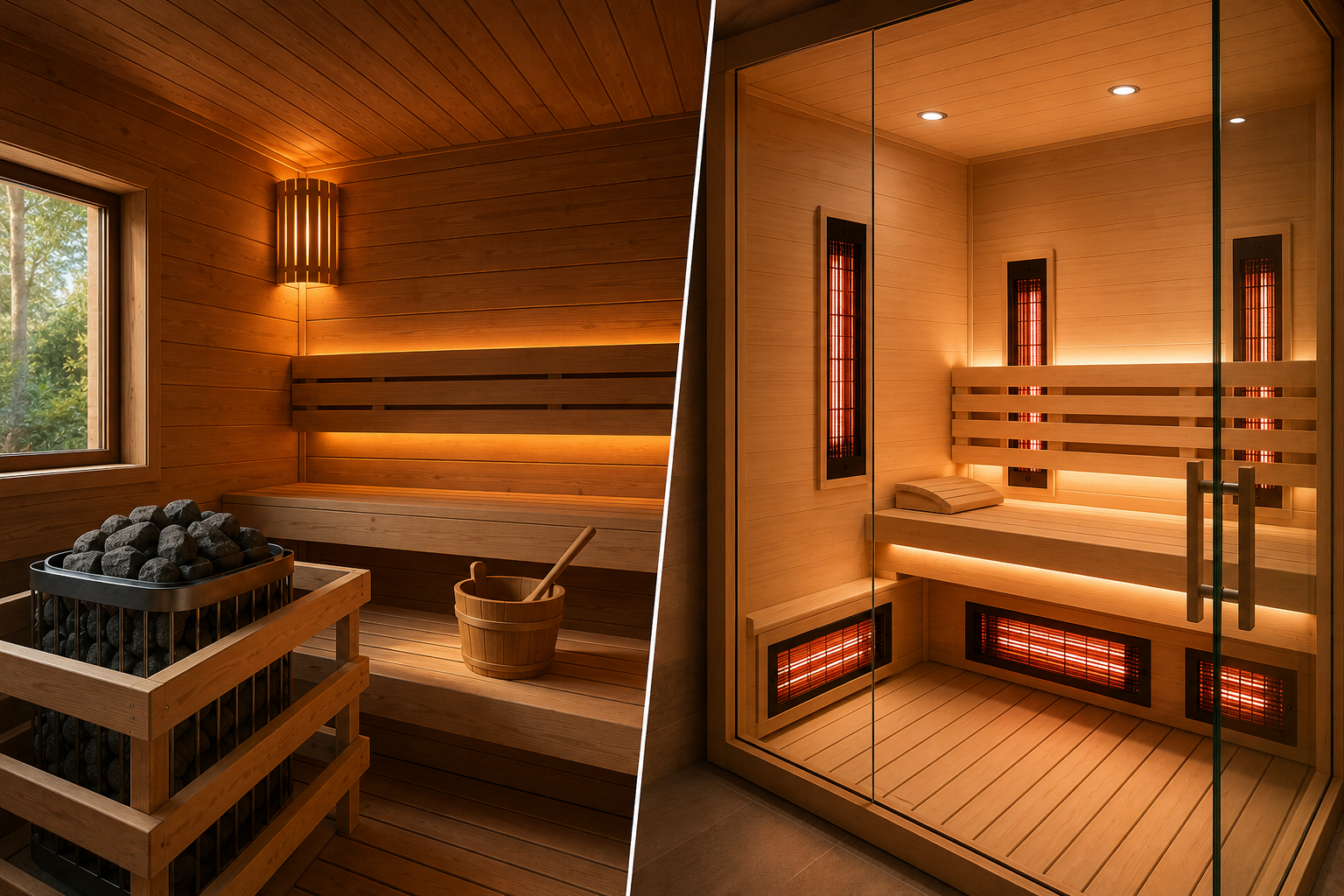
A traditional sauna heats the air inside the room, while an infrared sauna uses infrared energy to heat the body more directly. Because of these differences, the two types can provide very different experiences.
Understanding how each sauna works can help you decide which option is better suited to your space, preferences, and daily routine.
A traditional sauna heats the air inside an enclosed room using a sauna heater.
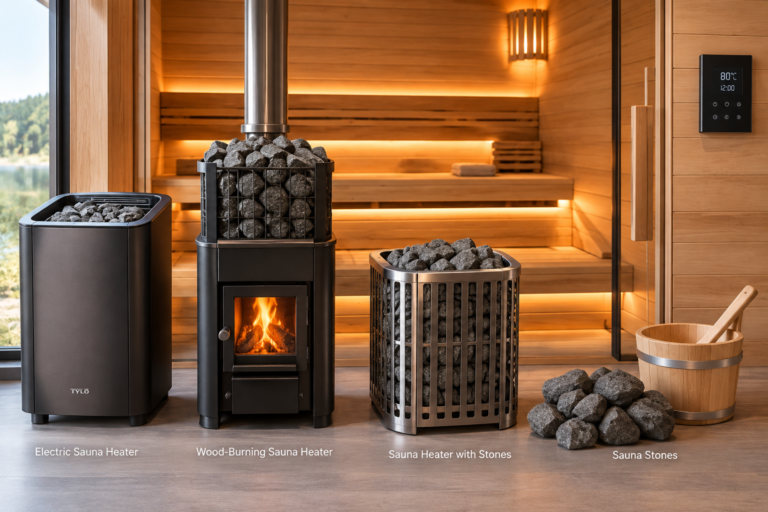
The heater may be electric or wood-burning, depending on the sauna design.
Traditional sauna heaters often use stones that absorb and distribute heat. In compatible systems, users can add a small amount of water to the heated stones to create steam and temporarily increase humidity.
Traditional saunas are commonly associated with:
They are available in both indoor and outdoor designs.
An infrared sauna uses infrared heating elements rather than primarily heating the surrounding air.
The infrared emitters produce infrared energy that warms the body directly.
Because the operating environment is different from a traditional sauna, infrared saunas generally operate at lower air temperatures.
Infrared saunas are often designed as compact cabins and can be suitable for home installations where space is limited.
The biggest difference is how the heat is produced.
| Feature | Traditional Sauna | Infrared Sauna |
|---|---|---|
| Heating method | Heats the air | Uses infrared emitters |
| Typical air temperature | Higher | Lower |
| Sauna stones | Often used | Generally not required |
| Steam | Possible with compatible heater | Not a traditional feature |
| Heating experience | Hot surrounding air | More direct radiant heat |
| Design | Sauna room or cabin | Often compact cabin |
| Installation | Can require more planning | Often simpler depending on model |
| Outdoor options | Common | Less common |
| Traditional sauna atmosphere | Strong | Different experience |
The right choice depends on what type of sauna experience you want.
A traditional sauna produces heat throughout the room.
As the heater warms the air, the temperature gradually increases.
The upper benches are generally warmer than lower areas because hot air rises.
This creates the familiar hot-room sauna experience.
For people who enjoy the classic sauna environment, the combination of hot air, wooden benches, sauna stones, and optional steam can be an important part of the experience.
An infrared sauna generally feels different.
Instead of relying primarily on very hot air, infrared emitters produce radiant energy that warms the body.
The surrounding air can remain considerably cooler than in a traditional sauna.
Some people prefer this type of environment because they find lower air temperatures more comfortable.
Others may prefer the intense heat of a traditional sauna.
Traditional saunas generally operate at higher air temperatures.
Infrared saunas typically operate at lower air temperatures.
However, comparing only the temperature numbers can be misleading because the two systems deliver heat differently.
A traditional sauna’s experience depends heavily on air temperature, humidity, heater location, and bench height.
An infrared sauna’s experience depends more on the infrared emitters, their placement, and the design of the cabin.
Humidity is another major difference.
Traditional sauna heaters with stones can allow users to add water to the stones when the heater is designed for this purpose.
This creates a temporary increase in humidity.
Infrared saunas generally do not use heated stones in the same way and are usually associated with a dry environment.
If you enjoy the combination of high heat and occasional steam, a traditional sauna may be the more suitable option.
Heating time depends on the specific model.
A traditional sauna generally needs time to heat the room and, depending on the heater, the sauna stones.
An infrared sauna may reach its operating conditions differently because it does not need to heat the entire room to the same temperature.
However, actual warm-up time varies according to:
Always check the manufacturer’s specifications rather than relying on a general estimate.
Traditional saunas can range from compact one- or two-person cabins to larger rooms designed for families or groups.
Infrared saunas are often available in compact cabin designs.
If space is limited, an infrared cabin may be easier to fit into an existing room.
However, compact traditional sauna cabins are also available.
The best choice depends on the dimensions of your available space.
Installation depends heavily on the model.
A small infrared sauna may have relatively simple installation requirements.
A traditional sauna can involve more planning because you may need to consider:
Outdoor traditional saunas can require additional construction and site preparation.
Always follow the manufacturer’s installation instructions.
Traditional saunas require regular maintenance of both the room and heater.
Maintenance can include:
Wood-burning systems can require additional maintenance of the firebox and chimney.
Infrared saunas generally have fewer components associated with traditional sauna heating.
Basic maintenance can include:
Maintenance requirements vary by model.
There is no universal answer.
A traditional sauna may be a better fit if you want:
An infrared sauna may be more appealing if you want:
Your available space and preferred experience should be the main factors.
Traditional saunas are commonly used in outdoor sauna cabins.
A wood-burning heater can be particularly suitable for an outdoor setup where appropriate ventilation, chimney installation, clearances, and local requirements can be accommodated.
Electric traditional sauna heaters are also available for outdoor sauna buildings.
Infrared saunas can be installed in certain outdoor environments, but the cabin and electrical components need to be specifically suitable for the conditions.
This depends on personal preference.
Someone who enjoys the classic sauna environment may prefer a traditional sauna from the beginning.
Someone who prefers a lower-temperature environment may find an infrared sauna more appealing.
If possible, experiencing both types before purchasing can make the decision easier.
Operating costs depend on the specific heater, sauna size, insulation, electricity rates, session length, and frequency of use.
A larger traditional sauna generally requires more energy to heat than a small cabin.
An infrared sauna may require less energy in some installations because it operates at lower air temperatures and often heats a smaller space.
However, actual energy consumption varies considerably between models.
Check the manufacturer’s power specifications when comparing products.
Traditional sauna rooms generally offer greater flexibility in terms of interior layout.
You can customize:
Infrared saunas are often sold as complete cabins, which can simplify installation but may provide fewer customization options.
Consider your priorities.
You prefer the classic sauna atmosphere, high air temperatures, sauna stones, and the option to create steam.
It can also be a good choice if you want a dedicated sauna room or outdoor sauna cabin.
You prefer a compact design, lower air temperatures, and radiant heating.
An infrared cabin may also be attractive if you want to add a sauna to an existing room without building a larger dedicated sauna space.
Before choosing between the two, consider:
Answering these questions can quickly narrow down your options.
Generally, traditional saunas operate at higher air temperatures, while infrared saunas operate at lower air temperatures. The two systems deliver heat differently, so temperature alone does not fully describe the experience.
No. Traditional saunas primarily heat the surrounding air with a sauna heater, while infrared saunas use infrared emitters to provide radiant heat.
Some traditional sauna heaters are designed for adding water to sauna stones. Always follow the heater manufacturer’s instructions.
Generally, no. Infrared saunas use infrared heating elements rather than a traditional stone-filled sauna heater.
A compact infrared cabin can be convenient when space is limited, but compact traditional sauna cabins are also available. Compare the actual dimensions and installation requirements before purchasing.
Yes. Outdoor traditional saunas are common, but the structure, heater, ventilation, electrical system, chimney where applicable, and local requirements all need to be considered.
Traditional and infrared saunas provide different heating experiences.
A traditional sauna heats the air and often incorporates heated stones, while an infrared sauna uses radiant infrared energy and generally operates at lower air temperatures.
Neither option is automatically better for everyone.
If you want a classic sauna environment with hot air, wooden benches, sauna stones, and optional steam, a traditional sauna may be the better match.
If you prefer a compact cabin and a lower-temperature radiant heating experience, an infrared sauna may be worth considering.
Before making a purchase, compare the heating method, room size, installation requirements, maintenance, energy use, and overall design.
The best sauna is ultimately the one that fits your space and provides the type of experience you actually want to use regularly.