Newsletter Subscribe
Enter your email address below and subscribe to our newsletter

All voices matter
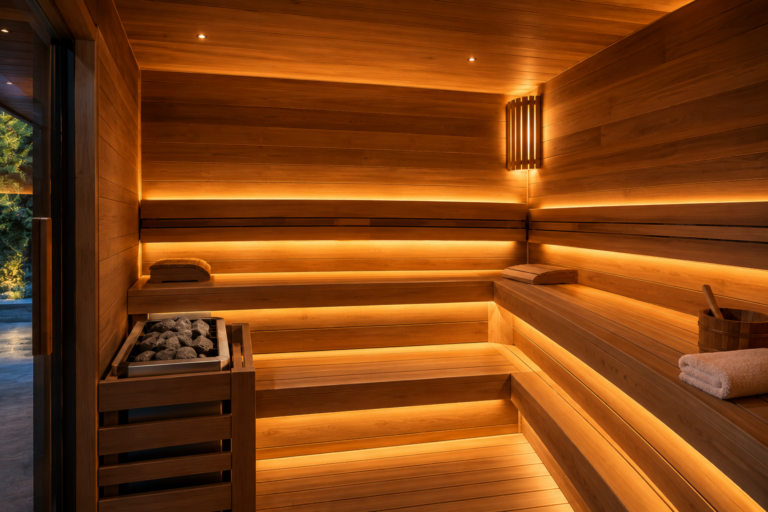
Choosing the right sauna size is one of the most important decisions when planning a home sauna.
A sauna that is too small may feel cramped, while a sauna that is unnecessarily large can take up valuable space and require more energy to heat.
The ideal size depends on several factors, including the number of people using the sauna, available installation space, bench layout, heater requirements, and whether you want to sit or lie down.
This guide explains the most common sauna sizes and what to consider before choosing one for your home.
Sauna dimensions affect more than the amount of floor space the unit occupies.
The size of the room can influence:
A well-designed compact sauna can be very comfortable, while a poorly planned large sauna may not make good use of available space.
The goal is to choose a size that matches the way you actually plan to use the sauna.
A one-person sauna can be a good option when space is limited.
A compact sauna may fit into:
A one-person design generally focuses on efficient use of space rather than providing a large seating area.
If you mainly want a private sauna for regular personal use, there may be little reason to install a large multi-person model.
A two-person sauna is one of the most practical options for many homes.
It provides enough space for two people while maintaining a relatively compact footprint.
A two-person sauna can work well for:
When comparing two-person models, look at the actual interior dimensions rather than relying only on the manufacturer’s user capacity.
Two models advertised for two people may have noticeably different bench layouts.
A four-person sauna provides more room for families or people who want additional seating space.
A larger sauna can also make it easier for users to change positions or sit comfortably without feeling crowded.
However, increasing the size also means considering:
If you rarely have more than two people using the sauna, a four-person model may provide more space than you actually need.
There are advantages to both.
A compact sauna can offer:
A larger sauna can provide:
The best choice depends on your priorities.
Floor area is important, but it is not the only measurement that matters.
Sauna height can affect the total room volume and therefore the heating requirements.
For example, two saunas with the same floor area can require different heater capacities if one has a significantly higher ceiling.
When selecting a heater, use the manufacturer’s recommended sauna volume rather than relying only on floor dimensions.
Ceiling height is an important part of sauna design.
The ceiling needs to provide enough room for comfortable seating while also allowing the heater and ventilation system to operate as intended.
A ceiling that is unnecessarily high can increase the volume that needs to be heated.
On the other hand, a ceiling that is too low can make the room uncomfortable.
Follow the sauna and heater manufacturer’s recommended dimensions when planning the final design.
The bench design can make a major difference in how spacious a sauna feels.
A small sauna can feel surprisingly comfortable when the benches are planned efficiently.
Common layouts include:
A straight bench is often suitable for compact saunas.
An L-shaped or U-shaped layout can provide more seating in a larger sauna.
Think about how you want to use the sauna before choosing its dimensions.
If you mainly sit during sauna sessions, a compact model may be enough.
If you want to lie down comfortably, you will need additional bench length.
This is one of the easiest details to overlook when choosing a sauna.
A model advertised for multiple users may have enough seating for several people but not enough bench length for someone to lie down.
The sauna itself is not the only space you need to consider.
Leave enough surrounding space for:
For an outdoor sauna, you should also consider the surrounding foundation and access for installation.
Measure the complete installation area before ordering a sauna.
Indoor saunas can make efficient use of existing rooms.
Common locations include:
Before installation, check the room dimensions and make sure the sauna will not interfere with doors, windows, plumbing, ventilation, or other equipment.
A compact sauna can often work well in an indoor environment where every square meter matters.
Outdoor saunas offer more flexibility because you may have more available space.
However, an outdoor sauna should be planned together with its surroundings.
Consider:
A sauna may fit within the available yard but still be difficult to install if there is not enough access for delivery.
One of the best ways to choose a sauna size is to think about your normal usage.
Ask yourself:
Will I usually use the sauna alone?
A compact sauna may be sufficient.
Will two people use it regularly?
A two-person model may provide a good balance between comfort and space.
Will family or friends use it together?
A larger model may be worth considering.
Do not choose a sauna based only on the maximum number of people you might use it with once or twice a year.
Choose according to your normal usage pattern.
Generally, a larger sauna has a greater volume of air and therefore requires a heater appropriately sized for that space.
The actual energy requirements depend on factors such as:
A larger sauna is not automatically inefficient, but there is usually little reason to heat a very large room if you only need space for one or two people.
Always check the actual interior dimensions and bench layout.
Make sure the door can open properly without hitting furniture or other objects.
Total room volume affects heater selection.
If you want to lie down, check the actual bench length.
You need enough room around the sauna for cleaning and servicing.
Always measure the installation location first.
Before shopping for a sauna, measure:
Width:
The available horizontal space.
Depth:
The distance from the front to the back of the installation area.
Height:
The available vertical clearance.
Then check:
Write down all measurements before comparing sauna models.
A compact two-person sauna can be a practical choice for couples or small households. The exact dimensions depend on the desired seating arrangement and whether users want to sit or lie down.
Yes. A smaller sauna can be an excellent choice when space is limited and the sauna will normally be used by one or two people.
Yes. Heater capacity is generally selected according to the sauna’s room volume and construction characteristics. Always follow the manufacturer’s sizing recommendations.
That depends on the interior dimensions and bench layout. Always check the actual seating area rather than relying only on the advertised capacity.
Measure the available width, depth, height, door clearance, and surrounding installation space. Also consider heater, ventilation, and electrical requirements.
Choosing the right sauna size is about finding the right balance between comfort and practicality.
A compact sauna can be an excellent solution for one or two people, while a larger model may be better for families or homeowners who want more flexible seating.
Before purchasing, measure the available space carefully and consider how the sauna will actually be used.
Pay attention to interior dimensions, bench length, ceiling height, heater requirements, ventilation, and maintenance access rather than focusing only on the advertised number of users.
The best sauna is not necessarily the biggest one. It is the one that provides enough room for comfortable use while fitting naturally into your home or outdoor space.