Newsletter Subscribe
Enter your email address below and subscribe to our newsletter

All voices matter
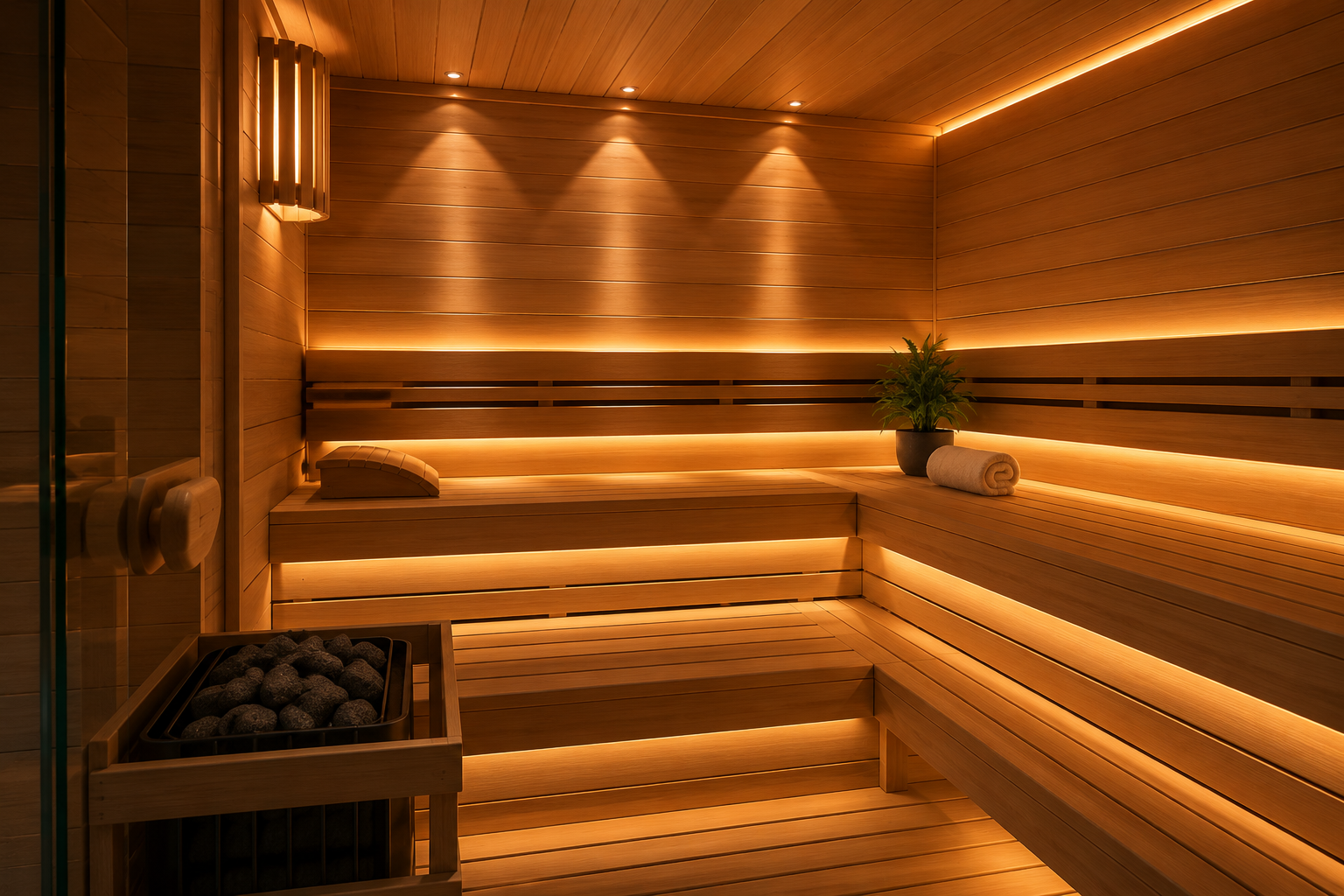
Lighting plays an important role in creating the right atmosphere inside a sauna. While the heater, wood, and benches are essential parts of the room, the right lighting can make a sauna feel warmer, more comfortable, and more relaxing.
A well-designed sauna should not rely on bright general lighting. Instead, soft and carefully positioned light can highlight the natural wood interior while creating a calm environment for relaxation.
If you are planning a new home sauna or upgrading an existing sauna room, understanding the different lighting options can help you create a more comfortable space.
A sauna is more than a heated room. It is a space designed for relaxation, and lighting has a direct effect on the overall atmosphere.
Bright overhead lights can make a sauna feel more like a utility room, while softer lighting can create a warm and peaceful environment.
Good sauna lighting can:
The goal is to provide enough light for comfortable use without making the room feel overly bright.
Not every light fixture is suitable for a sauna environment. Sauna interiors experience high temperatures and humidity, so lighting components should be specifically designed or rated for the conditions where they will be installed.
LED lighting is a popular choice for modern sauna designs because it can provide soft, consistent illumination while offering many installation possibilities.
When selecting LED lights for a sauna, consider:
Always check the manufacturer’s temperature and installation requirements before installing any lighting inside a sauna.
The color temperature of the lighting can significantly change the appearance of a sauna.
Warm white light generally creates a cozy and relaxing atmosphere. It works particularly well with natural cedar, hemlock, aspen, and other traditional sauna woods.
Warm lighting can make the wood appear richer and softer, making it a popular choice for traditional and luxury sauna interiors.
Neutral or cooler lighting can provide a cleaner and more contemporary appearance.
It may work well in modern sauna designs that use glass, minimalist woodwork, or darker interior elements.
For a traditional relaxation-focused sauna, however, many homeowners prefer warmer lighting because it complements the natural appearance of wood.
There are several ways to incorporate lighting into a sauna.
Installing lighting underneath the sauna benches is one of the most popular design approaches.
The light is partially hidden by the bench structure, creating a soft glow without placing a bright light directly in the user’s line of sight.
This can make the sauna feel more luxurious while emphasizing the horizontal lines of the benches.
Lighting behind the backrest can create a subtle illuminated effect.
Instead of directly illuminating the entire room, the light creates a gentle glow around the seating area.
This approach works particularly well in modern sauna designs.
Wall-mounted or recessed lighting can provide additional illumination while becoming part of the sauna’s interior design.
However, the location of the light should be carefully considered so that users are not looking directly into a bright fixture while sitting on the bench.
Ceiling lighting can provide general illumination throughout the room.
However, ceiling locations may experience significant heat, especially in areas closer to the top of the sauna.
For this reason, the lighting equipment must be appropriate for the actual temperature at its installation location.
A sauna generally does not need extremely bright lighting.
The ideal brightness depends on the size and layout of the room. A small sauna may require only subtle accent lighting, while a larger sauna may benefit from several low-intensity light sources.
Instead of using one very bright fixture, consider using multiple softer lights.
This can distribute illumination more evenly and prevent uncomfortable glare.
A layered lighting design can also make it easier to create different moods depending on how the sauna is being used.
The placement of sauna lights is just as important as the type of fixture.
Before installation, consider:
Avoid placing bright lights where they shine directly into the eyes of people sitting on the benches.
Hidden or indirect lighting is often an effective solution because it provides illumination without creating excessive glare.
One of the biggest advantages of carefully designed sauna interior lighting is its ability to enhance the appearance of natural wood.
Different woods respond differently to light. Warm illumination can emphasize grain patterns and create a richer appearance.
For example, a sauna with natural cedar walls can take on a deeper and warmer appearance under soft lighting.
This is particularly important for premium sauna rooms where the wood itself is an important part of the design.
Small sauna rooms do not necessarily need complicated lighting systems.
In a compact sauna, one carefully positioned light source combined with subtle accent lighting may be enough.
A good approach is to avoid overcrowding the ceiling and walls with fixtures.
Instead, consider:
This can help a small sauna feel more open and comfortable.
Larger sauna rooms may require several lighting points to provide consistent illumination.
A larger sauna can also offer more opportunities for decorative lighting.
For example, you might combine:
The key is to create a balanced lighting system rather than simply adding more brightness.
Your lighting should complement the overall design of the sauna.
Traditional sauna interiors often look best with warm, subtle lighting that emphasizes natural wood.
Modern saunas can use minimalist fixtures, hidden LED strips, or carefully integrated architectural lighting.
Luxury sauna rooms may combine several layers of indirect lighting to highlight benches, walls, ceilings, and glass elements.
Outdoor sauna rooms should also consider the transition between exterior and interior lighting. Exterior lights can help illuminate the entrance while softer interior lighting creates a comfortable environment inside.
There are several mistakes that can reduce the comfort and appearance of a sauna.
Standard indoor light fixtures may not be designed for sauna temperatures and humidity.
Excessive brightness can reduce the relaxing atmosphere of the room.
A light positioned directly in the user’s line of sight can become uncomfortable.
The temperature near the ceiling can be significantly higher than the temperature around the lower benches. Lighting equipment should be selected according to its actual installation environment.
More lights do not automatically create a better sauna. A simple lighting layout can often produce a more elegant result.
Lighting should ideally be considered during the sauna design stage rather than added as an afterthought.
Before construction or installation, determine:
Planning these details early can make installation easier and produce a cleaner finished appearance.
The best sauna lighting should provide comfortable visibility while maintaining the relaxing atmosphere that makes a sauna enjoyable.
Soft illumination, indirect lighting, warm tones, and carefully selected fixtures can enhance the natural beauty of the wood and make the entire room feel more inviting.
Whether you are designing a compact home sauna, a large custom sauna room, or an outdoor sauna, lighting should be considered an important part of the overall design.
Instead of focusing only on brightness, think about comfort, placement, temperature resistance, and atmosphere. With the right approach, even simple lighting can make a significant difference in the appearance and experience of a sauna.