Newsletter Subscribe
Enter your email address below and subscribe to our newsletter

All voices matter
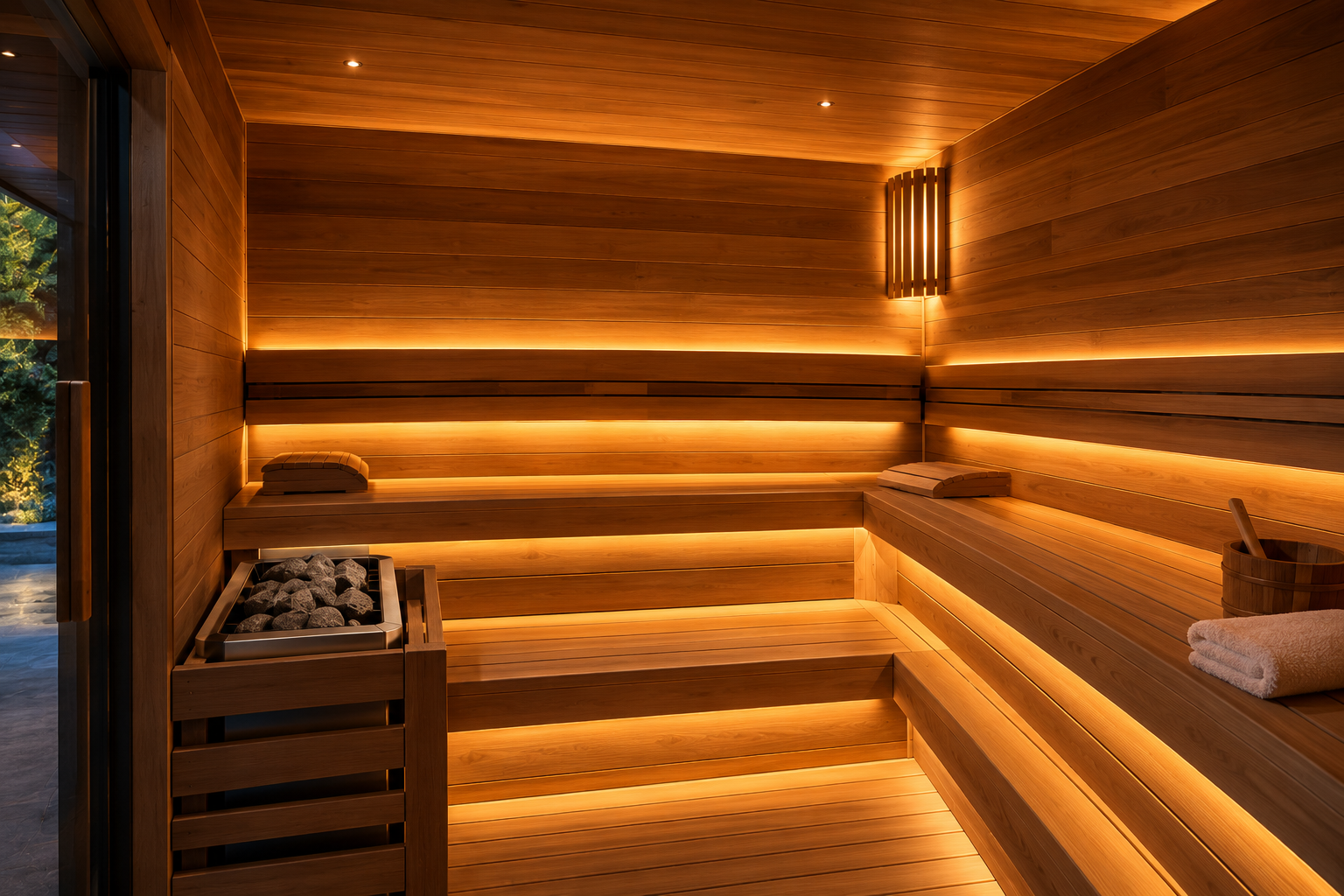
When designing a home sauna, most homeowners focus on the heater, wood, benches, and overall room size. However, one detail that can have a surprisingly large impact on the experience is sauna lighting.
The right lighting can transform a simple sauna room into a warm and relaxing space. Instead of making the room overly bright, a thoughtful lighting design can highlight the natural beauty of the wood, improve visibility, and create a comfortable atmosphere.
Whether you are building a traditional sauna, a modern indoor sauna, or a custom outdoor sauna, choosing the right lighting should be part of the design process from the beginning.
A sauna is designed to be a relaxing environment. Strong, direct lighting can make the room feel harsh and uncomfortable, while soft and indirect lighting can create a much more inviting atmosphere.
Good sauna lighting can help:
Lighting is particularly important in smaller sauna rooms because the right placement can make the space feel warmer and more visually open.
There is no single lighting solution that works for every sauna. The best choice depends on the room’s size, layout, design, and the location where the light will be installed.
LED lighting is commonly considered for modern sauna designs because it allows homeowners to create subtle and flexible lighting arrangements.
However, sauna conditions are different from those in a normal room. High temperatures and humidity mean that lighting equipment must be appropriate for its intended installation environment.
Before purchasing any fixture, always check the manufacturer’s specifications for:
Never assume that a standard household light fixture is suitable for use inside a sauna.
The color of the light can dramatically change the appearance of a sauna.
Warm white light is an excellent choice for creating a cozy and traditional atmosphere.
It works particularly well with natural wood such as cedar, hemlock, aspen, and spruce. Warm light can bring out the natural grain and make the interior look richer.
For homeowners who want their sauna to feel calm and comfortable, warm lighting is often a natural choice.
Neutral lighting creates a cleaner and more contemporary appearance.
It can work well in modern sauna rooms that combine natural wood with glass walls, minimalist benches, or darker design elements.
The choice ultimately depends on the atmosphere you want to create.
There are several ways to integrate lighting into a sauna without making it feel too bright.
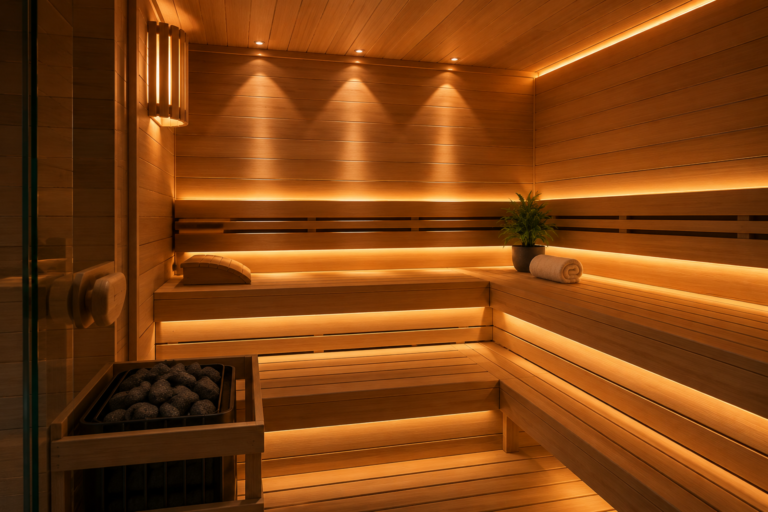
Under-bench lighting is one of the most popular sauna lighting ideas for modern home saunas.
The light source can be positioned beneath or behind the bench structure so that the fixture itself is less visible.
This produces a soft glow across the floor and lower part of the sauna while emphasizing the shape of the benches.
It can also give a simple sauna a more sophisticated appearance.
Lighting behind the sauna backrest can create another layer of indirect illumination.
Instead of shining directly toward the person sitting on the bench, the light reflects against the wall and produces a subtle glow.
This approach is especially effective for modern sauna interiors.
Wall-mounted fixtures can provide practical illumination while also becoming part of the sauna’s design.
A decorative wooden light cover can complement the surrounding wood and create an attractive focal point.
However, avoid positioning bright fixtures directly at eye level where they may cause glare.
Ceiling lights can provide general illumination throughout the room.
However, the upper part of a sauna can experience higher temperatures than the lower seating area. Therefore, any sauna ceiling lights must be suitable for the actual environmental conditions at the installation point.
A sauna does not usually need extremely bright lighting.
The purpose is to create enough illumination to move around safely and use the sauna comfortably without losing the relaxing atmosphere.
Instead of using one powerful light, consider using several lower-intensity sources.
For example, a sauna might combine:
This creates a layered lighting effect rather than a single bright point.
Lighting placement should be considered together with the rest of the sauna layout.
Before deciding where to install lights, consider:
The most comfortable lighting is often indirect.
For example, placing a light behind a backrest or underneath a bench can provide illumination without shining directly into the eyes.
This simple design choice can make a significant difference in the overall sauna experience.
One of the biggest benefits of good sauna interior lighting is the way it interacts with natural wood.
Wood is an important visual element in a sauna. Its grain, color, and texture help define the character of the room.
Soft lighting can emphasize these details without overpowering them.
A warm light positioned along a wooden wall can highlight the grain pattern and create subtle shadows between the boards.
This is particularly effective in premium sauna rooms where the quality and appearance of the wood are important parts of the design.
Small sauna rooms do not need complicated lighting systems.
In a compact space, a simple combination of indirect lighting and one practical light source may be enough.
Good options can include:
Avoid filling a small sauna with too many visible fixtures. A cleaner design can make the room feel larger and less crowded.
Larger sauna rooms offer more opportunities for creative lighting.
A spacious sauna may use several lighting zones to highlight different areas.
For example, lighting can be used to emphasize:
The goal should still be balance. Adding more lights does not necessarily create a better sauna.
A combination of soft light sources is often more attractive than a large number of bright fixtures.
Ordinary household lighting may not be designed for sauna temperatures and humidity.
Excessive brightness can make a sauna feel more like a normal room instead of a relaxing retreat.
Lights that shine directly toward seated users can quickly become uncomfortable.
Temperature can vary significantly depending on where a fixture is installed. Always follow the manufacturer’s specifications.
A sauna does not need to be brightly illuminated from every direction. Simpler lighting can often produce a more premium result.
The best time to plan lighting is before the sauna is installed.
Start by determining the location of:
Once these elements are planned, you can determine where lighting will be most useful.
This approach also helps avoid visible wiring and unnecessary modifications after the sauna has been completed.
Good sauna lighting is about much more than simply making the room brighter.
The right combination of warm illumination, indirect light, careful placement, and appropriate fixtures can make a home sauna feel more comfortable and visually appealing.
Whether you are designing a small indoor sauna or a spacious custom sauna room, consider lighting as part of the overall design rather than an afterthought.
With the right lighting strategy, natural wood, benches, glass, and other sauna features can work together to create a warm and relaxing environment.