Newsletter Subscribe
Enter your email address below and subscribe to our newsletter

All voices matter
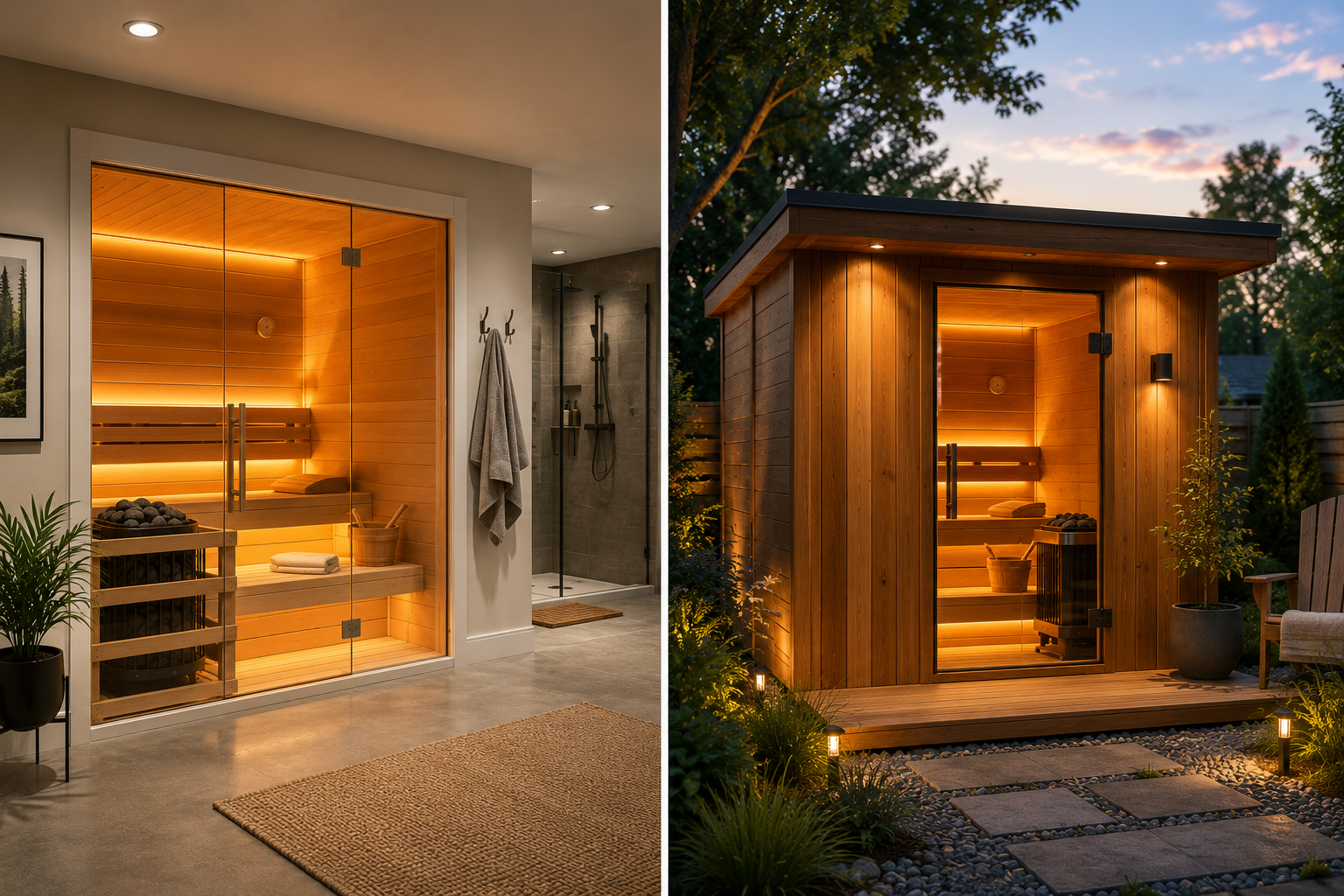
Choosing the right location is one of the most important decisions when planning a home sauna.
A sauna can be installed inside the house, in a garage, basement, home gym, or as a separate outdoor cabin. Each location has different advantages and installation considerations.
The best location is not simply the one with the most available space. You also need to think about ventilation, electrical requirements, access, moisture, privacy, maintenance, and how the sauna will fit into your daily routine.
This guide explains what to consider when deciding where to place a home sauna.
The location of a sauna affects much more than its appearance.
A well-planned location can make the sauna:
A poorly chosen location can create problems with ventilation, electrical connections, moisture management, or access.
For this reason, location should be considered before purchasing the sauna.
There are several possible locations for an indoor sauna.
A bathroom can be a convenient location because water and shower facilities are already nearby.
After a sauna session, you can easily take a shower without walking through the rest of the house.
However, the room still needs appropriate ventilation and construction.
Before installation, check whether the flooring, walls, electrical system, and ventilation are suitable for the sauna.
A basement can provide a good amount of privacy and may have enough space for a dedicated sauna room.
It can also be a practical location when the main living areas have limited space.
However, basements should be checked carefully for moisture and ventilation issues.
If the basement has existing humidity problems, those should be addressed before installing a sauna.
A sauna can be a natural addition to a home gym or wellness room.
This setup allows exercise and relaxation areas to be located together.
A separate sauna cabin can also help divide the room into different functional areas.
Make sure there is enough clearance around the sauna and that the electrical requirements can be met.
An unused bedroom or spare room can sometimes be converted into a dedicated sauna space.
This approach provides more flexibility because you can plan the sauna around the existing room dimensions.
However, converting a room into a sauna may require additional insulation, ventilation, electrical work, and interior construction.
Outdoor saunas are often installed in gardens, backyards, or other suitable areas around a property.
A backyard is one of the most popular locations for an outdoor sauna cabin.
The sauna can be positioned near a patio, garden, pool, or outdoor relaxation area.
When choosing the exact position, consider:
A sauna located near a pool can create a convenient outdoor wellness area.
However, the area around the sauna should be planned carefully.
Consider wet surfaces, drainage, access, and electrical safety.
The sauna should also be positioned so that water does not collect around its foundation.
A sauna cabin can become a feature within a landscaped garden.
Natural surroundings can create a relaxing atmosphere and provide additional privacy.
However, trees and plants should not interfere with ventilation, access, roof maintenance, or the structure itself.
The sauna itself is only part of the space requirement.
You also need room for:
Before purchasing a sauna, measure the entire installation area.
Do not measure only the cabin dimensions.
A sauna that technically fits into a space may still be difficult to use if there is insufficient room around the entrance.
The sauna door should be considered when planning the location.
Check the direction in which the door opens and make sure it does not interfere with:
For an outdoor sauna, also consider the path leading to the entrance.
A clear and stable walkway can make the sauna much easier to access throughout the year.
Electric sauna heaters can have specific power and wiring requirements.
Before deciding on a location, determine whether the electrical system can support the selected heater.
The installation may require:
The exact requirements depend on the heater model.
It is better to confirm these requirements before choosing the final sauna location.
Ventilation should be part of the location planning process.
A sauna needs an appropriate airflow arrangement based on its heater and design.
When selecting a location, consider where fresh air can enter and where exhaust air can be directed.
For indoor installations, the sauna should work with the ventilation system of the surrounding building.
For outdoor installations, the sauna still needs properly designed ventilation even though it is located outside the main house.
The floor beneath and around the sauna should be appropriate for the installation.
Indoor locations may use tile, concrete, or other suitable surfaces.
For outdoor saunas, the structure may require a prepared foundation or stable platform.
The surface should be level and capable of supporting the sauna.
Water drainage should also be considered, especially in outdoor locations.
Privacy can be easier to control indoors depending on the room.
A sauna located in a private bathroom or basement may already have natural privacy.
If the sauna is installed in a living room or shared space, a glass door may provide less privacy.
In this situation, consider the sauna’s position and surrounding room layout before choosing the door style.
Outdoor privacy depends heavily on placement.
A sauna positioned directly next to a neighboring property may require additional screening.
Possible solutions include:
The goal is to create a comfortable space without blocking necessary access or ventilation.
Outdoor saunas are exposed to changing weather conditions.
Before choosing an outdoor location, consider:
The sauna structure, roof, exterior finish, and foundation should be appropriate for the local environment.
A sheltered location may reduce direct weather exposure.
An outdoor sauna does not necessarily need to be far from the house.
In many cases, placing it relatively close can make regular use more convenient.
However, the exact distance may depend on:
If using a wood-burning heater, additional requirements may apply.
A garage can sometimes provide enough space for a sauna.
It also offers protection from outdoor weather.
However, garages may have different ventilation, insulation, and electrical conditions from the main living areas.
Before installation, make sure the garage can accommodate the sauna and its required clearances.
The heater manufacturer’s instructions and applicable local requirements should always be followed.
Placing a sauna near a shower can be convenient.
This arrangement creates a simple sequence:
Sauna → Shower → Relaxation
For an indoor wellness area, this can be particularly practical.
However, the surrounding room still needs suitable moisture management and ventilation.
Convenience depends on how you use the sauna.
An indoor sauna is usually easier to access because you do not need to go outside.
An outdoor sauna provides a more separate experience and may offer greater privacy.
Think about your normal routine.
If you expect to use the sauna frequently, choose a location that makes it easy to use without additional preparation.
Before making a final decision, evaluate each possible location using these questions:
The location that performs well across all ten factors is usually a strong candidate.
A sauna may physically fit in a room but still have insufficient clearance or ventilation.
Leave enough space to inspect and maintain important components.
Check the heater requirements before deciding where the sauna will go.
An unstable or poorly drained surface can create long-term problems.
Do not position the sauna or modify surrounding structures in a way that interferes with required airflow.
Always check the entrance area before finalizing the layout.
| Consideration | Indoor | Outdoor |
|---|---|---|
| Access | Very convenient | Requires outdoor access |
| Weather exposure | Low | Higher |
| Privacy | Depends on room | Depends on location |
| Foundation | Usually existing floor | May require preparation |
| Electrical access | Often easier | May require additional work |
| Ventilation | Works with building | Needs dedicated planning |
| Maintenance | Generally easier | More exterior maintenance |
| Design | Can integrate with home | Can create a separate retreat |
Choosing the right location is just as important as choosing the sauna itself.
An indoor sauna can be ideal when convenience and easy access are priorities. Bathrooms, basements, home gyms, and spare rooms can all provide suitable possibilities when properly prepared.
An outdoor sauna can be a better choice when indoor space is limited or when you want a separate wellness area in the backyard.
Before installation, look beyond the available floor area.
Consider ventilation, electrical requirements, door clearance, foundation, privacy, weather exposure, drainage, and long-term maintenance.
The best sauna location is one that fits naturally into your home and makes the sauna easy to use on a regular basis.