Newsletter Subscribe
Enter your email address below and subscribe to our newsletter

All voices matter
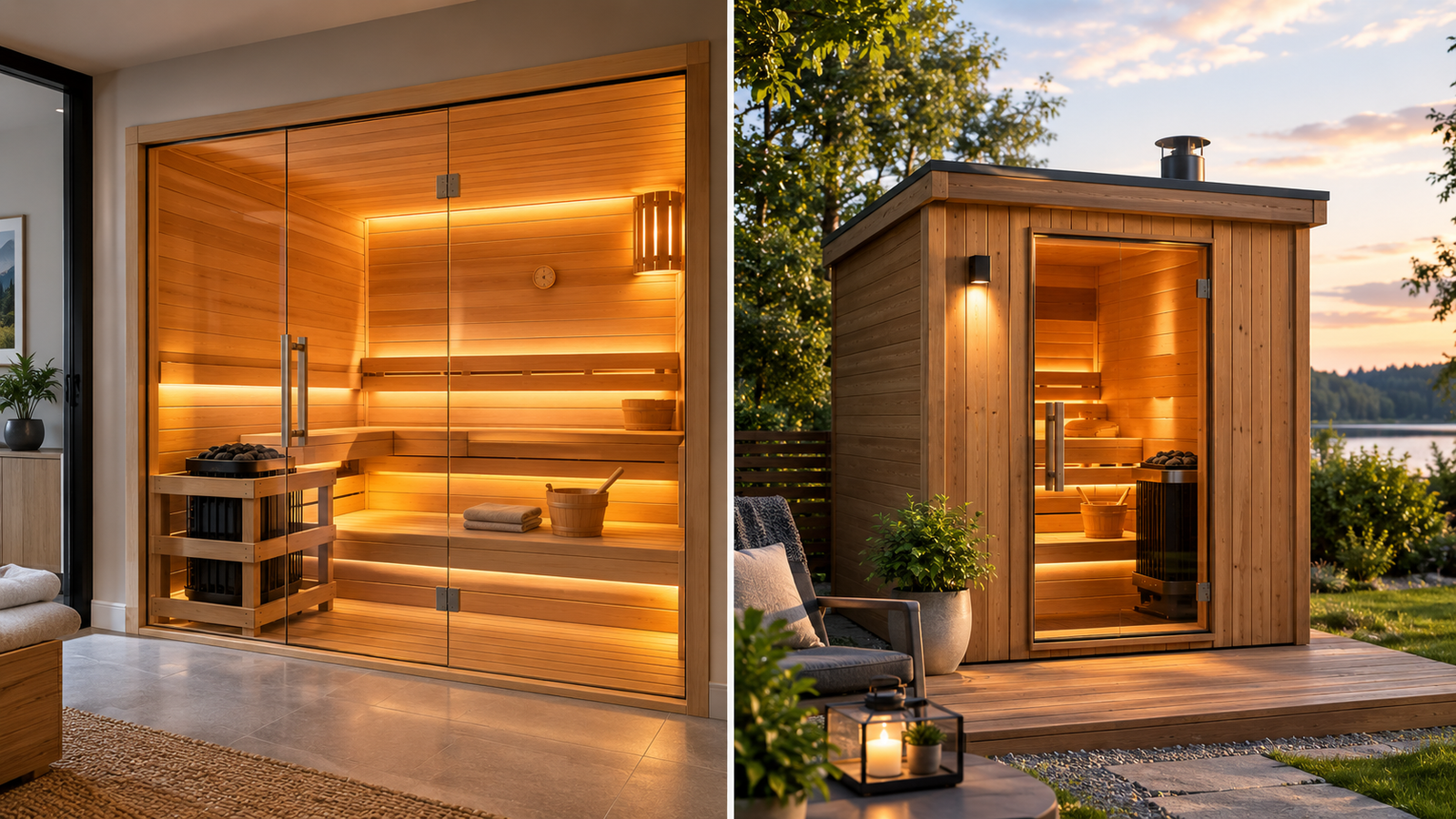
When planning a home sauna, one of the first decisions is where to install it.
Some homeowners prefer an indoor sauna because it can be conveniently located inside the house. Others choose an outdoor sauna cabin because it creates a separate wellness space in the backyard.
Both options can provide a comfortable sauna experience, but they have different installation requirements, space considerations, maintenance needs, and design possibilities.
Understanding the differences between indoor and outdoor saunas can help you decide which option works best for your home.
An indoor sauna is installed inside an existing building.
Common locations include:
An indoor sauna can be a prefabricated cabin or a custom-built sauna room.
One of the biggest advantages is convenience. You do not need to leave the house to use the sauna, and the sauna can be integrated into an existing interior design.
An outdoor sauna is installed outside the main house, often in a backyard, garden, or dedicated outdoor area.
Outdoor saunas are commonly built as standalone cabins.
They can range from compact one- or two-person structures to larger sauna buildings with changing areas or relaxation spaces.
An outdoor sauna can create a more independent wellness area and may provide more flexibility when indoor space is limited.
The main differences can be summarized as follows:
| Feature | Indoor Sauna | Outdoor Sauna |
|---|---|---|
| Location | Inside the home | Outside the home |
| Convenience | Very high | Requires going outdoors |
| Space | Uses indoor floor area | Uses outdoor space |
| Construction | Can use existing rooms | May require additional structure |
| Weather exposure | Minimal | Significant |
| Installation | Often simpler for existing suitable spaces | May require site preparation |
| Privacy | Depends on location | Usually easier to create |
| Design flexibility | High | High |
| Maintenance | Generally easier | More exterior maintenance |
| Heating options | Electric commonly used | Electric or wood-burning options may be possible |
Neither option is automatically better.
The right choice depends on your home, available space, climate, and preferred sauna setup.
An indoor sauna is convenient when you want to use it regularly.
You can move from the sauna to a shower, bedroom, or relaxation area without going outside.
Indoor saunas are protected from rain, snow, wind, and direct sunlight.
This can simplify exterior maintenance.
An indoor sauna can be integrated into a bathroom, home gym, or wellness room.
The surrounding space can also be designed to complement the sauna.
Outdoor weather does not directly affect access to an indoor sauna.
This can be especially convenient during cold or rainy seasons.
Indoor installation also has limitations.
Not every home has a suitable room for a sauna.
A custom sauna may require changes to walls, flooring, electrical systems, or ventilation.
The existing room needs to be evaluated for:
An indoor sauna becomes part of the house.
If you want a completely separate wellness area, an outdoor sauna may be more suitable.
If your home has a suitable backyard, an outdoor sauna can provide a dedicated space without taking up interior floor area.
An outdoor sauna cabin can become an architectural feature in a garden or backyard.
Wooden exteriors can work particularly well with natural surroundings.
A properly positioned outdoor sauna can offer a greater sense of privacy.
Landscaping, fencing, and the location of the sauna can all contribute to the overall design.
For many homeowners, stepping outside into the fresh air before or after a sauna session is part of the appeal.
The exterior structure must withstand local weather conditions.
Depending on the climate, this can include:
The exterior materials and roof should therefore be selected appropriately.
An outdoor sauna may require a suitable foundation or prepared surface.
The exact requirements depend on the structure and local regulations.
An electric outdoor sauna may require electrical connections from the main property.
A wood-burning heater may require an appropriate chimney and additional safety considerations.
Climate is particularly important when choosing an outdoor sauna.
In areas with heavy snowfall, the roof and foundation need to be designed appropriately.
In hot or humid climates, ventilation and moisture management become especially important.
In areas with frequent rain, exterior wood should be protected according to the manufacturer’s recommendations.
The sauna should be designed for the conditions where it will actually be installed.
Ventilation is an important consideration for both indoor and outdoor saunas.
For an indoor installation, the sauna ventilation system needs to work with the surrounding building.
The design should account for:
Avoid treating ventilation as an optional feature.
It should be considered during the design stage.
Outdoor saunas also require appropriate ventilation.
Because outdoor temperatures can vary significantly, the ventilation system should be designed according to the sauna construction and heater requirements.
If the sauna uses a wood-burning heater, combustion air and chimney requirements also need to be considered.
Always follow the heater and sauna manufacturer’s specifications.
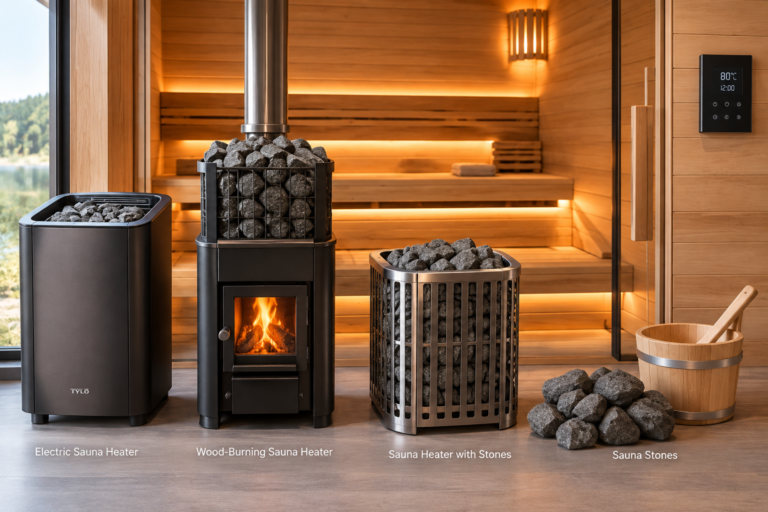
Electric sauna heaters are commonly considered for indoor installations.
They can provide convenient operation and eliminate the need to store firewood.
However, electrical requirements vary depending on the heater.
Before installation, check:
A qualified electrician should handle electrical work where required.
Outdoor saunas can accommodate different heating approaches depending on the design.
Electric heaters can provide convenient operation.
Wood-burning heaters can provide a more traditional experience, particularly in standalone outdoor cabins.
However, wood-burning installations require careful attention to:
Indoor saunas generally have less exterior maintenance because they are protected from the weather.
Outdoor saunas require maintenance of both the interior and exterior.
Outdoor maintenance may include:
Maintenance requirements vary according to the materials and local climate.
The total cost depends on much more than the sauna itself.
For an indoor sauna, potential additional expenses may include:
For an outdoor sauna, additional expenses may include:
A simple prefabricated sauna can have a very different total project cost from a custom-built sauna.
If indoor space is extremely limited, an outdoor sauna may be an attractive solution.
A compact outdoor cabin can provide a dedicated sauna without sacrificing interior living space.
However, if you have an unused bathroom, basement, or home gym area, a compact indoor sauna may be more convenient.
Measure your available space before deciding.
For families, convenience can be an important factor.
An indoor sauna may be easier to access and integrate into a larger home wellness area.
An outdoor sauna can provide a separate space where users can relax away from the main living areas.
The ideal option depends on how the household plans to use the sauna.
Consider an indoor sauna if you prioritize:
Consider an outdoor sauna if you prioritize:
Before choosing an indoor or outdoor sauna, ask:
Answering these questions can help you avoid unexpected installation problems.
Neither is universally better. Indoor saunas offer convenience and weather protection, while outdoor saunas provide a separate wellness space and can be easier to install when indoor space is limited.
Yes, but the sauna structure, foundation, exterior materials, ventilation, heater, electrical system, and weather protection should all be appropriate for outdoor installation.
They can require more maintenance because the exterior is exposed to weather. The amount of maintenance depends on the materials, construction, and local climate.
Yes, if the heater and electrical installation are specifically suitable for the outdoor sauna design and local requirements.
Not necessarily. The total cost depends on the sauna structure, foundation, utilities, heater, installation, and site preparation.
Choosing between an indoor and outdoor sauna comes down to your available space, lifestyle, climate, and preferred design.
An indoor sauna provides excellent convenience and can integrate naturally into a home gym, bathroom, or wellness room.
An outdoor sauna offers a separate retreat and can make excellent use of backyard space.
Before purchasing, look beyond the sauna itself.
Consider the foundation, ventilation, heater, electrical requirements, insulation, maintenance, and local installation requirements.
Once these factors are considered, it becomes much easier to determine whether an indoor sauna or outdoor sauna is the better fit for your home.