Newsletter Subscribe
Enter your email address below and subscribe to our newsletter

All voices matter
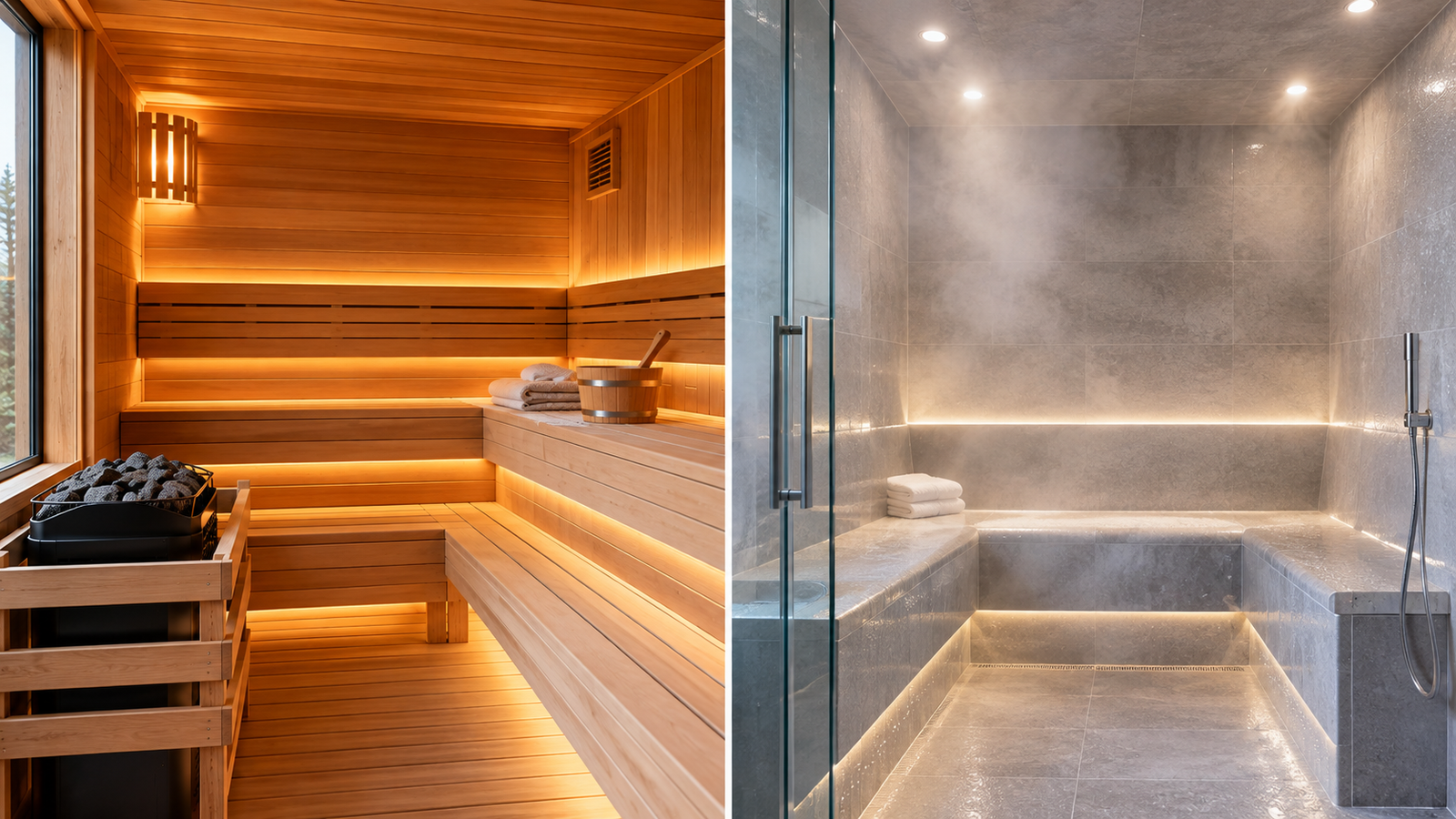
Choosing between a sauna and a steam room can be confusing, especially if you are planning to create a relaxing wellness space at home. Both use heat to encourage relaxation and sweating, but they differ significantly in temperature, humidity, construction requirements, maintenance, and overall experience.
Understanding these differences can help you choose the right option for your home, budget, and personal preferences.
In this guide, we compare saunas and steam rooms, explain their main advantages and disadvantages, and explore which option may be better for your home wellness setup.
The biggest difference between a sauna and a steam room is how they deliver heat.
A traditional sauna uses a heater to warm the air and surrounding wooden surfaces. It generally operates at a higher temperature with relatively low humidity. A steam room uses a steam generator to fill an enclosed space with warm, humid air, creating a much wetter environment.
Although both provide a heated environment, the experience can feel very different.
A traditional sauna typically uses an electric heater or a wood-burning stove to heat sauna stones and the surrounding air. Water may be poured onto the stones in suitable sauna systems to create a temporary burst of steam.
Saunas are usually finished with heat-resistant wood and designed with benches, ventilation, and carefully positioned heating equipment.
Many homeowners choose traditional saunas because of their natural wood interiors, dry heat, and classic sauna atmosphere.
A steam room uses a steam generator to produce steam and maintain a high-humidity environment. The room is usually constructed with nonporous, water-resistant materials such as tile, glass, and properly installed waterproof surfaces.
Because moisture is present throughout the session, steam rooms require effective drainage, waterproofing, and moisture control.
Steam rooms are often preferred by people who enjoy warm, humid air rather than the hotter, drier conditions of a traditional sauna.
The following table highlights the main differences to consider before choosing either option.
| Feature | Traditional Sauna | Steam Room |
|---|---|---|
| Typical temperature | Around 150–195°F (65–90°C) | Around 100–120°F (38–49°C) |
| Humidity | Generally low, with temporary increases possible | Very high, close to saturation |
| Heating method | Electric heater or wood-burning stove | Steam generator |
| Common interior materials | Sauna-grade wood | Tile, glass, and waterproof finishes |
| Overall experience | Hotter, less humid air | Warm, moisture-rich air |
| Installation priorities | Heater clearance, ventilation, and heat-resistant construction | Waterproofing, drainage, vapor control, and moisture management |
| Routine maintenance | Bench cleaning, ventilation, and heater inspection | Surface cleaning, drainage, and steam-generator maintenance |
| Common installation locations | Indoor rooms, basements, bathrooms, or outdoor spaces | Bathrooms, dedicated wet rooms, or purpose-built wellness areas |
| Best suited for | People who prefer a traditional hot-room experience | People who prefer a humid, steam-filled environment |
Temperature ranges are general examples. Actual settings depend on the equipment, design, and manufacturer recommendations.
Temperature and humidity are two of the most noticeable differences between a sauna and a steam room.
Traditional saunas typically operate at higher air temperatures than steam rooms. The relatively low humidity can make the heat feel different from the humid warmth of a steam room.
Some sauna users enjoy the feeling of sitting in a hot wooden room and adjusting their experience by changing benches or shortening their sessions.
Infrared saunas are another option. Instead of primarily heating the surrounding air, infrared heaters deliver radiant heat to the body. Their operating temperatures are generally lower than those of traditional saunas.
Steam rooms operate at lower air temperatures but maintain much higher humidity. The air feels moist, and condensation can form on walls, ceilings, and other surfaces.
Some people prefer this humid environment, while others find it uncomfortable.
Which feels hotter? A sauna often has a much higher air temperature, but comfort depends on both temperature and humidity. Neither environment is automatically better for everyone.
Both saunas and steam rooms can provide a relaxing break from daily routines. However, it is important to distinguish between the general experience of using a heated room and health benefits supported by scientific evidence.
Sauna sessions may help users relax and temporarily ease the feeling of muscle tension. Research on traditional sauna bathing has also found associations between regular use and certain cardiovascular outcomes, although much of the long-term evidence is observational and does not prove that sauna use directly causes those outcomes.
Saunas should be considered a wellness activity rather than a replacement for exercise, medical treatment, or advice from a healthcare professional.
A steam room creates warm, humid air that some people find soothing when their nose or throat feels dry. However, evidence that steam rooms treat respiratory conditions or prevent illness is limited.
High humidity can also feel uncomfortable for people who struggle with heat or breathing in humid environments.
There is no clear scientific basis for declaring one universally healthier than the other. The available research differs in quality and quantity, and findings about traditional sauna bathing should not automatically be applied to steam rooms or infrared saunas.
Your personal comfort, health circumstances, and ability to tolerate heat are important factors when deciding which option to use.
Installation is one of the most important differences between a sauna and a steam room, particularly if you are planning a home wellness project.
A home sauna may be installed as a prefabricated cabin or built as a custom room.
Before choosing a model, consider:
Prefabricated sauna kits can simplify planning because many components are designed to work together.
A steam room requires more extensive moisture management.
Important considerations include:
A poorly constructed steam room can allow moisture to damage nearby walls, ceilings, and framing. Professional design and installation are particularly valuable for this type of project.
The total cost of either option depends on room size, equipment quality, construction requirements, labor, and local building conditions.
| Cost factor | Sauna | Steam Room |
|---|---|---|
| Equipment | Sauna heater or infrared heating system | Steam generator and controls |
| Construction | Cabin assembly or heat-resistant room finishes | Waterproof room assembly and moisture-resistant finishes |
| Plumbing | Usually limited, depending on the design | Water supply and drainage may be required |
| Cleaning | Clean benches and interior surfaces regularly | Clean wet surfaces and manage mineral deposits |
| Long-term concerns | Heater, stones, controls, and wood condition | Generator performance, seals, drainage, and moisture damage |
A prefabricated sauna can be a relatively straightforward option when a suitable space and electrical supply are already available. A steam room may involve more complex renovation because of waterproofing and plumbing.
However, a custom outdoor sauna or a high-end indoor sauna can also be expensive. Compare complete installed costs rather than assuming one option will always be cheaper.
For many homeowners, the best choice depends on the space available and how much renovation is practical.
For smaller homes, measure carefully before selecting a product. Check door clearance, ventilation, electrical capacity, ceiling height, and access for maintenance.
If you are considering a sauna kit, compare its external dimensions with the actual installation area rather than relying only on the advertised seating capacity.
Both environments expose your body to heat, so safe use matters regardless of which option you choose.
Neither a sauna nor a steam room is a substitute for medical treatment. Avoid claims that either can detoxify the body, guarantee weight loss, or cure a medical condition.
Neither is universally better. Saunas are generally hotter and less humid, while steam rooms offer warm, highly humid air. Your preferences, installation space, budget, and health circumstances should guide your decision.
Sweating varies by person and conditions. High humidity can make sweat evaporate less efficiently, so you may feel wetter in a steam room. Visible moisture does not necessarily mean you are receiving greater health benefits.
Both may help you relax. Some people prefer the dry heat and wooden surroundings of a sauna, while others enjoy the humid atmosphere of a steam room.
It may be possible, but a standard bathroom is not automatically suitable for steam-room use. The enclosure, ceiling, waterproofing, vapor control, door, drainage, and generator must be designed for sustained high humidity.
A prefabricated sauna may be simpler to maintain because it does not require the same wet-room construction. A steam room needs regular cleaning of wet surfaces and attention to drainage, seals, and the steam generator. Actual maintenance depends on the equipment and installation quality.
Some healthy adults may tolerate regular use, but frequency and session length should depend on individual tolerance and health circumstances. Begin conservatively, follow the manufacturer’s guidance, and seek medical advice if you have a condition that could make heat exposure risky.
When comparing a sauna vs. a steam room, focus on more than temperature alone. The best option is the one that matches your preferred heat experience, available space, installation budget, and maintenance expectations.
A traditional sauna is often a strong choice for homeowners who want a hot, wood-lined wellness space with relatively straightforward cabin-style installation. A steam room may be more suitable for those who prefer humid heat and are prepared to invest in proper waterproofing and drainage.
Before buying, compare equipment specifications, installation requirements, energy use, warranties, and long-term maintenance. Careful planning will help you create a comfortable home wellness space that suits your needs.
Disclaimer: This article is for general informational purposes only and is not medical or professional construction advice. Consult qualified professionals when planning electrical, plumbing, waterproofing, or other regulated work.