Newsletter Subscribe
Enter your email address below and subscribe to our newsletter

All voices matter
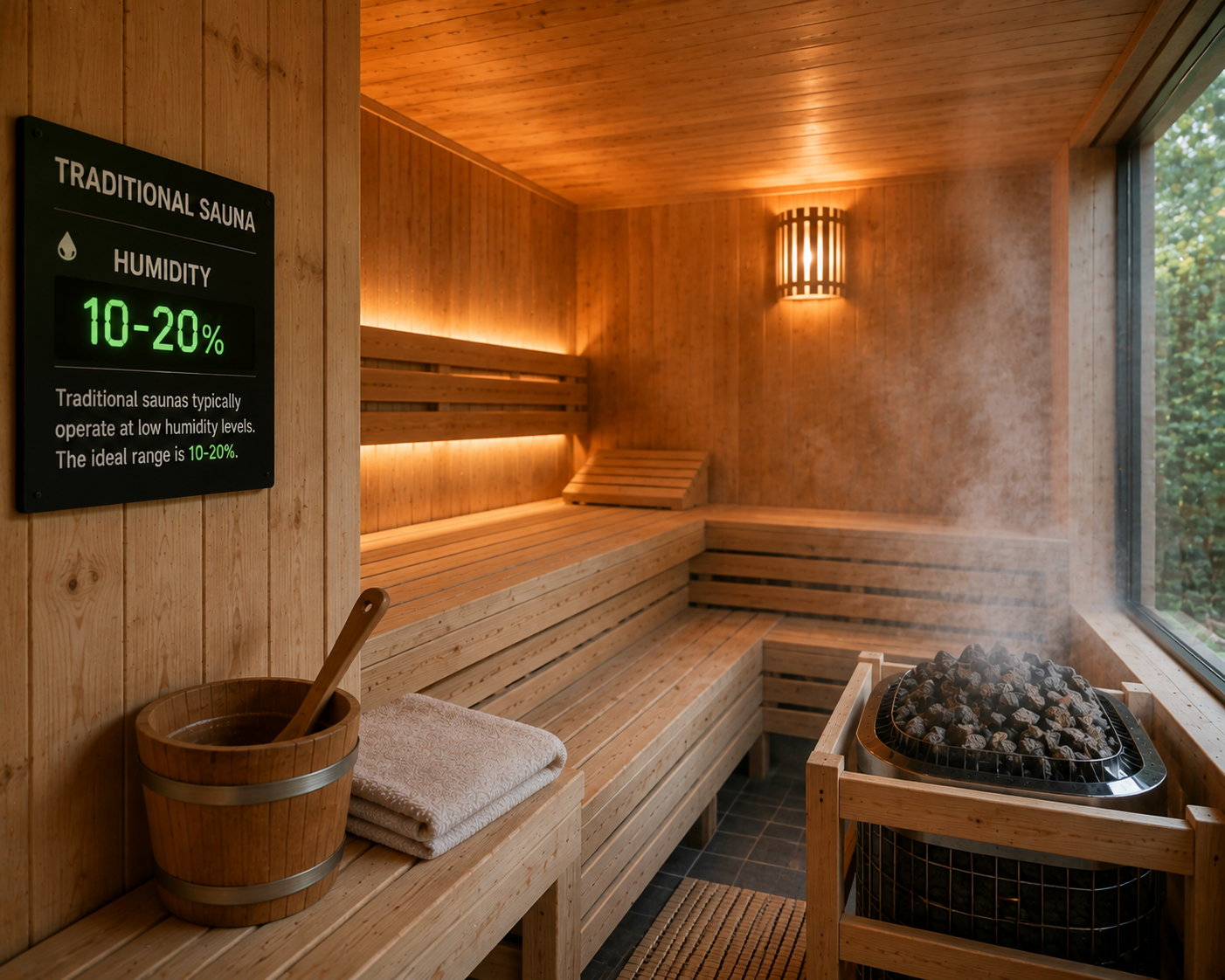
A traditional sauna is designed to provide a hot, relaxing environment using a heated stove and sauna stones. One of the most important factors that affects the sauna experience is temperature.
So, how hot should a traditional sauna be?
For many people, a traditional sauna is typically used at temperatures between 150°F and 195°F (65°C and 90°C). However, the ideal temperature depends on personal comfort, sauna experience, humidity, and the type of sauna being used.
Understanding how temperature and humidity work together can help you create a more comfortable sauna session.
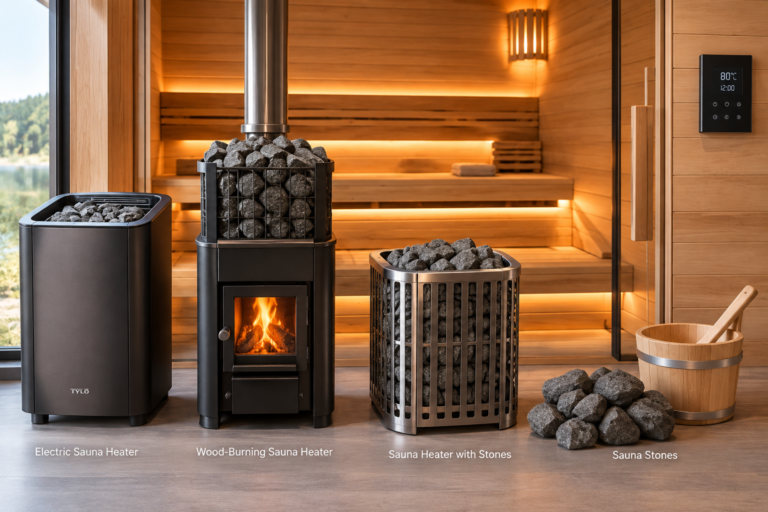
A traditional sauna, sometimes called a Finnish-style sauna, uses a heater to warm the air inside the sauna room. The heater also heats a collection of sauna stones.
Unlike an infrared sauna, which uses infrared energy to warm the body more directly, a traditional sauna primarily heats the surrounding air.
Water can also be poured over the heated stones to temporarily increase humidity and create a stronger sensation of heat.
The combination of high temperature, warm air, and changing humidity creates the characteristic traditional sauna experience.
Traditional saunas commonly operate within a temperature range of approximately 150°F to 195°F (65°C to 90°C).
However, there is no single temperature that is perfect for everyone.
Here is a general guide:
| Temperature | Approx. °C | General Experience |
|---|---|---|
| 150°F | 65°C | Mild and comfortable |
| 160°F | 71°C | Moderate heat |
| 170°F | 77°C | Hotter traditional sauna experience |
| 180°F | 82°C | High heat |
| 190°F | 88°C | Very hot |
| 195°F | 90°C | Extremely hot for many users |
Beginners may prefer starting toward the lower end of the range, while experienced sauna users may be more comfortable with higher temperatures.
The goal should not be to reach the highest possible temperature. A comfortable and controlled environment is generally more important than maximizing heat.
If you are new to traditional saunas, starting around 150°F to 160°F (65°C to 71°C) can be a practical approach.
This allows you to become familiar with the heat without immediately choosing a very high temperature.
As you become more comfortable with the sauna environment, you can gradually adjust the temperature based on your personal preference.
Pay attention to how you feel rather than trying to match someone else’s preferred temperature.
Temperature is only one part of the traditional sauna experience.
Humidity can significantly change how hot the sauna feels.
Traditional saunas are generally relatively dry, but users can pour small amounts of water over the heated sauna stones. This creates steam and temporarily increases humidity.
When humidity increases, sweat may evaporate more slowly from the skin. As a result, the same air temperature can feel significantly hotter.
For example, a sauna at 170°F with relatively dry air may feel different from a sauna at the same temperature after water has been added to the stones.
This is why temperature alone does not completely describe how a sauna feels.
Not necessarily.
A higher temperature does not automatically mean a better sauna experience.
Several factors can affect comfort, including:
A well-designed sauna should provide consistent and controllable heat rather than simply reaching the highest possible temperature.
If the temperature feels uncomfortable, lowering the heat is usually more practical than trying to tolerate it.
Sauna sessions should be based on personal comfort and tolerance.
If you are new to sauna use, shorter sessions can make it easier to understand how your body responds to heat. More experienced users may choose longer sessions, but there is no universal session length that is appropriate for everyone.
It is also important to stay hydrated and leave the sauna if you begin feeling unwell.
Signs such as dizziness, nausea, unusual weakness, or feeling faint are reasons to stop the session and cool down.
People with certain medical conditions, those who are pregnant, or anyone who has concerns about heat exposure should speak with a qualified healthcare professional before using a sauna.
There are several things to consider when choosing a temperature.
If you are new to traditional sauna use, begin with a moderate temperature rather than immediately selecting a very high setting.
If you add water to sauna stones, the heat can feel more intense. You may prefer a lower temperature when using higher humidity.
A small sauna can heat differently from a larger sauna. Heater capacity, insulation, ventilation, and room design can all influence temperature distribution.
There is no need to use the same temperature every time. You can adjust the setting according to your experience, the season, and your personal preference.
A dedicated sauna thermometer can help you monitor the actual temperature instead of relying only on the heater setting.
Traditional and infrared saunas operate differently, so their temperature ranges should not be directly compared.
Traditional saunas heat the air inside the room and commonly operate at substantially higher air temperatures.
Infrared saunas generally use lower air temperatures because infrared energy is used to warm the body more directly.
This means a lower temperature on an infrared sauna does not necessarily mean the experience is less intense.
When comparing sauna types, consider the heating method, temperature range, humidity, installation requirements, and overall experience rather than temperature alone.
A few simple practices can make sauna sessions easier and more enjoyable:
Most importantly, listen to your body. Sauna use should be a comfortable experience, not a competition to tolerate extreme heat.
A traditional sauna commonly operates between approximately 150°F and 195°F (65°C and 90°C), although the appropriate setting depends on the sauna and the user’s preference.
180°F (82°C) is within the range commonly associated with traditional saunas, but it may feel very hot for beginners. Individual tolerance varies.
Starting around 150°F to 160°F (65°C to 71°C) can be a reasonable way to become familiar with the heat before adjusting the temperature.
Adding water to heated sauna stones increases humidity and can make the heat feel more intense, even though the air temperature may not change significantly.
Traditional saunas generally use higher air temperatures than infrared saunas. However, the two heating methods work differently, so temperature alone is not a useful measure of which experience is “hotter.”
The best traditional sauna temperature is not necessarily the highest temperature your sauna can reach.
For many users, a setting somewhere between 150°F and 195°F (65°C and 90°C) provides the traditional sauna environment they are looking for. Beginners may want to start at the lower end, while experienced users can adjust the temperature according to their comfort level.
Temperature, humidity, ventilation, sauna design, and session length all contribute to the overall experience. Finding the right balance is more important than simply choosing the hottest setting.