Newsletter Subscribe
Enter your email address below and subscribe to our newsletter

All voices matter
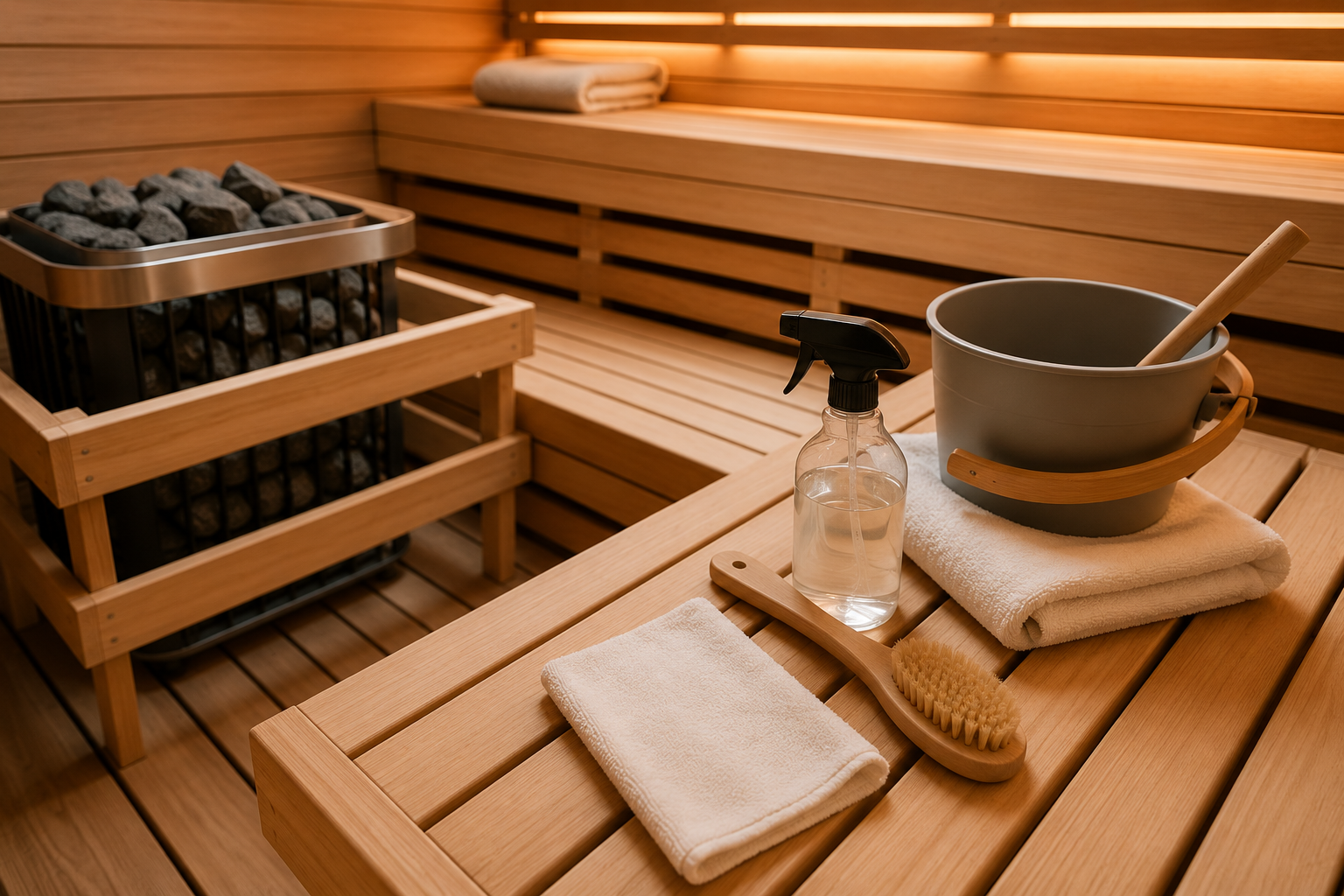
A sauna is designed to withstand regular heat and repeated use, but keeping it clean is an important part of maintaining a comfortable sauna environment.
Regular cleaning helps remove sweat, dust, dirt, and moisture from surfaces that are frequently touched. It can also help keep the wood, benches, floor, and other sauna components in better condition.
The good news is that sauna cleaning does not have to be complicated.
With a simple routine after each use and a more thorough cleaning from time to time, most home sauna owners can keep their sauna looking clean and ready for the next session.
A sauna is a warm environment where people sit or lie directly on wooden benches.
Sweat and moisture can come into contact with the benches and other surfaces during normal use.
If these surfaces are not cleaned regularly, dirt and residue can gradually build up.
Regular cleaning can help:
Cleaning should therefore be considered part of normal sauna maintenance.
The cleaning frequency depends on how often the sauna is used.
For a frequently used home sauna, a simple wipe-down after each session can be helpful.
A more thorough cleaning can be performed regularly based on usage.
For example:
After each use:
Remove towels and personal items and allow the sauna to dry.
Regularly:
Wipe benches and other frequently touched surfaces.
Periodically:
Perform a deeper cleaning of the interior and inspect the sauna for signs of wear or moisture.
A sauna used only occasionally may require less frequent deep cleaning.
You do not need a large collection of cleaning products.
Basic supplies may include:
Always check the sauna manufacturer’s recommendations before using a cleaning product.
Avoid products that may damage wood surfaces or leave strong residues when exposed to heat.
The benches are among the most important surfaces to clean because they come into direct contact with users.
Start by removing any towels, accessories, or other objects.
Use a suitable cloth or soft brush to remove loose dirt.
Then clean the surface using the method recommended by the manufacturer.
Avoid soaking wooden benches with excessive water.
After cleaning, allow the benches to dry thoroughly.
Using a towel on the bench during sauna sessions can also help reduce direct contact between sweat and the wood.
Sauna walls usually require less frequent cleaning than benches.
Start by removing visible dust or debris.
Use a soft cloth and an appropriate cleaning solution if necessary.
Do not aggressively scrub the wood unless the manufacturer’s instructions specifically allow it.
The goal is to clean the surface without unnecessarily damaging the wood grain.
The floor can collect dust, moisture, and debris.
Cleaning requirements depend on the type of floor installed.
For a removable or washable floor surface, cleaning may be relatively straightforward.
For wooden surfaces, avoid excessive water and make sure the floor can dry properly.
Pay particular attention to areas around the sauna entrance and heater.
The heater area requires special attention.
Before cleaning around the heater:
Make sure the heater is switched off and completely cool.
Never pour cleaning liquids directly onto the heater or electrical components.
For traditional sauna heaters, follow the manufacturer’s instructions for cleaning and maintaining the heater and sauna stones.
Do not move or handle hot sauna stones.
If the heater has removable components, clean them only according to the manufacturer’s instructions.
Traditional sauna heaters may use sauna stones to store and distribute heat.
Over time, stones can accumulate dust or small particles.
The cleaning and replacement procedure depends on the specific heater and stone type.
When the stones are completely cool, inspect them for cracks or deterioration.
Damaged stones may need to be replaced according to the heater manufacturer’s recommendations.
Never handle sauna stones while they are hot.
Avoid automatically using ordinary household soap or strong cleaners on sauna wood.
Some products may leave residue or affect the appearance of the wood when the sauna is heated.
If cleaning products are necessary, use a product specifically recommended for sauna surfaces or follow the manufacturer’s maintenance instructions.
For light routine cleaning, warm water and an appropriate cloth may be sufficient for some surfaces.
A sauna should normally have a natural wood smell and a clean environment.
If an unpleasant odor develops, the first things to check are:
Remove wet items and allow the sauna to dry completely.
Regular cleaning and appropriate ventilation can help prevent odors from becoming a recurring problem.
Cleaning and drying should go together.
After using the sauna, remove towels and other wet items.
Allow appropriate airflow through the room so that moisture can escape.
A sauna that remains damp for extended periods may require more maintenance than one that is allowed to dry properly after use.
Follow the ventilation and drying recommendations provided for your specific sauna.
The sauna door can collect fingerprints, dust, and moisture.
Glass doors can usually be cleaned with an appropriate glass-cleaning method.
However, avoid allowing cleaning products to come into contact with sauna components that are not designed for them.
Wooden door frames should be cleaned according to the recommendations for the particular wood and finish.
Glass can make a sauna feel more spacious and modern, but water marks can become visible over time.
Use a suitable glass-cleaning method and a soft cloth.
Avoid abrasive materials that could scratch the glass or damage surrounding surfaces.
Drying the glass after cleaning can help prevent visible water marks.
Avoid using cleaning products simply because they are common household products.
Be particularly careful with:
Always check the manufacturer’s recommendations before applying a product to sauna wood, benches, heaters, or other components.
Regular cleaning is only one part of maintaining sauna wood.
You should also:
If a sauna uses a specific protective treatment, follow the manufacturer’s maintenance instructions.
Wooden sauna interiors should not be unnecessarily soaked.
Always wait until the heater and surrounding surfaces are sufficiently cool.
Some products may not be suitable for sauna environments.
Benches receive frequent direct contact and should be part of the regular cleaning routine.
Wet towels can introduce unnecessary moisture into the sauna.
A clean sauna also needs appropriate airflow and drying.
A practical routine can be very simple.
Remove towels and personal belongings.
Allow the sauna to cool and dry appropriately.
Wipe the benches and other commonly touched surfaces.
Check the floor for dirt or debris.
Clean the interior more thoroughly according to the manufacturer’s recommendations.
Inspect benches, walls, flooring, ventilation openings, and heater components.
Look for:
Early inspection can help identify maintenance needs before they become larger problems.
Do not assume that a sauna can be washed with large amounts of water. Excessive moisture can affect wood and other components. Follow the manufacturer’s cleaning instructions.
Remove debris, wipe the benches using an appropriate cleaning method, and allow them to dry completely. Avoid excessive water and harsh chemicals.
Frequently used benches should receive regular cleaning. A light wipe after use and periodic deeper cleaning can help maintain them.
Not necessarily. Check whether the cleaner is suitable for the specific sauna material and heated environment before using it.
Keep benches clean, remove wet towels, maintain appropriate ventilation, and allow the sauna to dry after use.
Keeping a sauna clean does not require a complicated maintenance routine.
The most important habits are simple: keep the benches clean, remove wet towels, avoid excessive moisture, clean surfaces appropriately, and allow the sauna to dry after use.
Always follow the maintenance instructions provided by the sauna and heater manufacturer, especially when cleaning wood surfaces, heaters, and sauna stones.
With regular care, your sauna can remain a comfortable and attractive part of your home for years to come.